
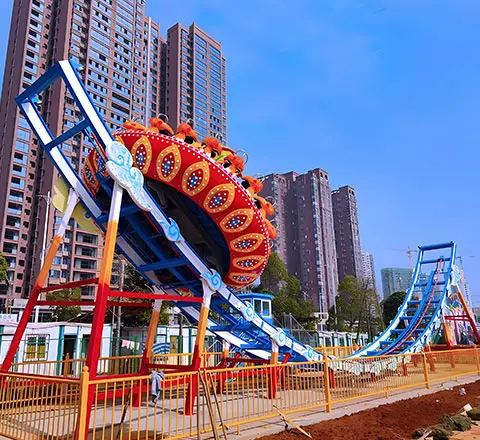


Starting a kiddie amusement rides business can be a smart investment for amusement parks, shopping malls, family entertainment centers, tourist resorts, scenic spots and small children’s parks. Compared with large thrill rides, commercial kiddie amusement rides usually require a lower investment, occupy less space and can bring a shorter payback period when they are placed in the right location and operated properly.
This guide focuses on commercial powered kiddie amusement rides, not only indoor playgrounds, soft play areas or unpowered play equipment. The rides discussed here include mini carousels, kids bumper cars, trackless trains, mini Ferris wheels, coffee cup rides, self-control plane rides, mini pirate ships, mini roller coasters and other mechanical amusement rides suitable for children and families.
For investors, the key to success is not simply buying a cheap ride. A profitable kiddie rides business depends on market research, suitable location, correct ride selection, reliable equipment quality, safe operation, regular maintenance and strong after-sales support from the manufacturer. Before buying kiddie amusement rides, investors should compare different products, visit amusement parks, study new products at exhibitions, check materials and workmanship, and evaluate the real service ability of the supplier.
Carnee Rides is a China amusement rides manufacturer with more than 20 years of production experience. We provide OEM and ODM services, customized kiddie rides, family rides and one-stop amusement park solutions for customers worldwide. In this guide, we will explain how to plan, choose and operate a kiddie rides business in a practical way.
What Is a Kiddie Amusement Rides Business?
A kiddie amusement rides business is a commercial entertainment project that uses children-friendly amusement rides to attract families and generate revenue. It can be a small ride corner in a shopping mall, a children’s ride zone in an amusement park, a family entertainment area in a resort, or a group of compact powered rides inside an indoor entertainment center.
Common kiddie amusement rides include mini carousel rides, kids bumper cars, trackless train rides, mini Ferris wheels, coffee cup rides, self-control planes, mini pirate ships, small flying chair rides, mini roller coasters and other children’s amusement park rides.
Unlike home toys or simple play structures, commercial kiddie rides are designed for repeated public operation. They need stronger materials, stable mechanical systems, clear safety protection, simple operation and convenient maintenance. A good kiddie ride should be attractive to children, reassuring to parents and practical for operators.
The business model can be flexible. Operators can sell single-ride tickets, offer package deals, or include kiddie rides as part of a full park pass.
Are Kiddie Amusement Rides Different from Indoor Playground Equipment?
Yes. Kiddie amusement rides and indoor playground equipment are different, although they can be used together in the same venue.
Indoor playground equipment usually includes soft play structures, slides, ball pools, climbing frames, tunnels, trampolines or unpowered play systems. These products are mainly used for free play, time-based entry tickets or parent-child activity areas.
Commercial powered kiddie amusement rides are mechanical or electric rides. They have movement, lights, music, seats, control systems and a clear ride cycle. They can create stronger visual attraction and are easier to sell as individual paid attractions.
| Type | Examples | Suitable Venues | Main Revenue Model |
| Powered kiddie amusement rides | Mini carousel, kids bumper cars, trackless train, mini Ferris wheel, coffee cup ride | Amusement parks, malls, FECs, resorts, scenic spots | Single tickets, package tickets, park tickets |
| Indoor playground equipment | Soft play, slides, ball pool, climbing structure | Indoor playgrounds, shopping malls, family centers | Entry ticket, time-based ticket |
| Outdoor unpowered play equipment | Swings, climbing nets, outdoor slides | Public parks, schools, resorts, communities | Supporting attraction or free play |
For many commercial venues, powered kiddie rides are a valuable addition because they are more visible, more exciting and easier to monetize. A mini carousel at a mall entrance, a kids train in a resort or a bumper car arena in a family entertainment center can quickly attract children and encourage parents to spend.

Why Are Kiddie Amusement Rides a Good Investment?
Kiddie amusement rides can be a good investment because they serve a stable family market. Children are frequent amusement consumers, and parents are usually willing to pay for safe, colorful and enjoyable experiences.
Compared with large amusement rides, many kiddie rides have several advantages:
- Lower initial investment
- Smaller footprint
- Easier installation
- Lower power consumption
- Suitable for both indoor and outdoor venues
- Flexible ticketing methods
- Strong repeat-play potential
- Shorter payback period in good locations
- Easy combination with other family attractions
For a new investor, kiddie rides can be used to test the market before expanding into a larger amusement project. For an existing park or resort, kiddie rides can improve family appeal and increase the number of attractions suitable for young visitors.
However, profitability is not automatic. A ride placed in a low-traffic area may perform poorly even if the equipment is good. A cheap ride with poor quality may create downtime and maintenance problems. A ride that does not match the target age group may fail to attract repeat customers.
Before investing, operators should study the local market, compare different ride types, understand family visitor behavior and choose a supplier that can provide long-term support.
Where Can You Operate Kiddie Rides?
Choosing the right location is one of the most important factors in a successful kiddie rides business. The best location should have family traffic, safe space, good visibility and convenient access.
Shopping Malls Shopping malls are suitable for compact and visually attractive kiddie rides. Mini carousels, small train rides, kids bumper cars, self-control planes and small rotating rides can be placed near entrances, food courts, cinema floors or children’s retail areas. For mall operators, kiddie rides can increase family stay time. For investors, malls provide stable foot traffic, especially on weekends and holidays.
Family Entertainment Centers Family entertainment centers can combine powered kiddie rides with arcade games, indoor playgrounds and party rooms. Suitable rides include coffee cup rides, kids bumper cars, mini carousels, self-control plane rides and small train rides. In this type of venue, kiddie rides can be sold as single rides, package tickets or membership benefits.
Outdoor Amusement Parks Outdoor amusement parks usually need a complete children’s ride area. Mini Ferris wheels, mini roller coasters, mini pirate ships, carousels, flying chairs, track trains and bumper cars can form a family-friendly ride zone. A strong children’s area is important because not all visitors want thrill rides. Families with young children need safe, gentle and colorful attractions.
Tourist Resorts and Scenic Spots Resorts, farms, zoos, cultural parks and scenic areas often need family attractions that are beautiful, safe and easy to operate. Trackless trains, tourist trains, carousels, mini Ferris wheels and family rides can improve the visitor experience and create photo opportunities. A themed trackless train can also help transport visitors while acting as an amusement attraction.
Carnivals and Temporary Events For carnivals, fairs and seasonal events, operators need rides that are easy to transport, install and operate. Small carousels, kids trains, mini pirate ships and compact rotating rides can be good options. In this case, investors should check transportation cost, installation requirements, local permits and operating safety rules.
What Are the Best Kiddie Amusement Rides for a New Business?
The best kiddie amusement rides depend on your venue, budget, target age group and business model. A new business should not choose rides randomly. It should build a suitable ride mix that includes visual attraction, interactive fun and family-friendly experiences.


- Mini Carousel Ride: A mini carousel is one of the most classic kiddie amusement rides. It is colorful, gentle and easy for children to understand. It is suitable for shopping malls, indoor centers, amusement parks, resorts and children’s parks.
- Kids Bumper Cars: Interactive and encourage repeat play. When choosing kids bumper cars, investors should check the vehicle material, battery quality, charging time, anti-collision design, seat safety and floor requirements.
- Trackless Train Ride: Ideal for shopping malls, resorts, zoos, scenic spots, farms and large family venues. It can attract children while also carrying parents and groups around the site.
- Mini Ferris Wheel: Creates a landmark effect and gives children a special experience. Although smaller than a large observation wheel, it still attracts attention and helps create family photo moments.
- Coffee Cup Ride: A popular family ride that is colorful, interactive and suitable for both indoor and outdoor use.
- Self-Control Plane Ride: Allows children to feel more involved because they can experience up-and-down movement during the ride.
- Mini Pirate Ship: Gives children a mild thrill experience. Less intense than a large pirate ship but still exciting for young riders.
- Mini Roller Coaster: Requires more space and budget than smaller rides, but it can bring stronger excitement and higher ticket value.

Before investing, operators should study the local market, understand family visitor behavior, and choose a supplier that provides long-term support. For investors looking to maximize early cash flow, selecting the most profitable small amusement rides is often the fastest strategy to achieve a quick ROI.
How Much Does It Cost to Start a Kiddie Amusement Rides Business?
The cost of starting a kiddie amusement rides business depends on the ride type, ride size, passenger capacity, quantity, customization, shipping, installation, local permits and site preparation. Instead of only asking “How much is one kiddie ride?”, investors should first decide what kind of business model they want to build.
| Business Model | Suitable For | Main Cost Factors |
| Single ride test | Mall corner, small FEC, event space | Ride price, transport, power setup, rent or revenue share |
| Small kiddie ride zone | Mall, indoor center, small park | 3–6 rides, layout, decoration, safety fence, installation |
| Outdoor children’s amusement area | Amusement park, resort, scenic spot | Larger rides, foundation, landscaping, transport, staff training |
| Complete family amusement project | New park or large attraction | Site planning, ride mix, infrastructure, ticketing system, marketing |
To get an accurate quotation, investors should provide the supplier with their country, location (indoor/outdoor), available area size, target age group, budget range, preferred ride types, required capacity, and voltage conditions. To understand the broader price ranges across the industry, you can review our full guide on how much amusement park rides cost to better allocate your project budget.
How to Calculate Revenue and Payback Period?
The payback period of a kiddie amusement rides business depends on ticket price, visitor traffic, operating days, maintenance cost, rent and staff cost.
A simple revenue formula is:
- Daily Revenue = Ticket Price × Daily Riders
- Monthly Revenue = Daily Revenue × Operating Days
- Net Profit = Total Revenue – Rent – Staff Cost – Electricity – Maintenance – Other Costs
The main factors affecting payback period include location foot traffic, percentage of family visitors, ticket price, ride capacity, ride cycle time, daily operating hours, seasonal demand, venue rent or revenue share, and equipment downtime.
Let’s Look at a Conservative Example (Mini Carousel): Assume your 12-seat mini carousel operates in a shopping mall for 8 hours a day, completing 6 cycles per hour. Even at a highly conservative 30% occupancy rate, you are entertaining around 170 children daily. At a modest $3 ticket price, that generates $510 in daily revenue. Even after deducting mall rent, electricity, and staff wages, a strategically placed kiddie ride can easily recover its $5,000–$10,000 purchase cost within just 1 to 2 months.


What Should You Check Before Buying Kiddie Amusement Rides?
Before buying kiddie amusement rides, investors should compare products from multiple angles. Price is important, but it should not be the only decision factor.
- Visit More Projects: Observing which rides attract children, how parents respond, how long visitors queue, and what ticket prices are accepted provides real market understanding.
- Material Quality: Check the steel structure, fiberglass parts, paint quality, welding workmanship, seat material, anti-corrosion treatment, and electrical cabinet.
- Manufacturing Details: Smooth edges, stable structure, neat wiring, strong welding, good paint finish, and clean assembly all reflect the supplier’s production ability.
- After-Sales Service: Does the supplier provide installation guidance? Are operation manuals available? Can spare parts be supplied quickly? A small part problem should not stop a ride for weeks.
How to Choose Safe and Profitable Kiddie Amusement Rides?
A safe and profitable kiddie ride should match the venue, target age group and operation plan.
- Target Age Group: Young children need gentle speed and strong safety protection. Older children prefer more interactive rides.
- Ride Capacity: Higher capacity can improve revenue in busy locations, but it must match the site size and visitor flow.
- Indoor or Outdoor Use: Indoor rides must consider floor load and ceiling height. Outdoor rides need weather resistance and anti-corrosion treatment.
- Safety Protection: Look for safety belts, guardrails, anti-slip flooring, emergency stop buttons, smooth edges, and stable movement.
- Theme and Appearance: A well-designed, themed ride (ocean, forest, space, castle) often performs better and increases repeat play.
What Mistakes Should New Kiddie Ride Operators Avoid?
- Choosing the Cheapest Ride Only: Cheap equipment may reduce initial cost, but poor material and limited support cause higher repair costs later.
- Ignoring Site Size: Buying a ride before confirming the site size can lead to installation problems. Every ride needs queue area, maintenance access, and safety fences.
- Buying Without a Clear Ride Mix: A good area needs a visual anchor ride (carousel), an interactive ride (bumper cars), and a family-friendly ride (trackless train).
- Not Considering Local Rules: Different countries have different requirements for public operation, inspection, and insurance.
- Choosing a Supplier Without Real Experience: Investors should check factory strength, project cases, production experience, export ability, and after-sales service.
How to Operate Kiddie Amusement Rides Safely?

Safe operation is the foundation of a long-term business. Parents will only allow children to ride again if the equipment looks clean, stable, and well-managed.
Before daily operation, staff should check the power system, control panel, emergency stop button, seats, safety belts, guardrails, moving parts, and warning signs. The ride should be tested without passengers before opening. During operation, staff should strictly follow age, height, and passenger number rules.
After closing, staff should power off the equipment, clean the ride, inspect for visible damage, record operating problems, and report maintenance needs. Regular maintenance, including lubrication, bolt tightening, and battery checks, reduces downtime and extends equipment life.
Beyond daily checks, operators should strictly follow comprehensive amusement park ride safety standards to protect visitors and avoid costly operational liabilities.
How to Improve Profit from a Kiddie Amusement Rides Business?
Profit comes from correct location, attractive equipment, smart pricing, safe operation and good customer experience.
- Choose High-Traffic Family Locations: Mall entrances, food courts, and resort activity centers are prime spots.
- Use Package Tickets: Sell three-ride packages, family tickets, or birthday promotions to increase average spending.
- Combine Anchor Rides and Small Rides: Use a mini Ferris wheel or trackless train to attract attention, and coffee cup rides to increase play options.
- Reduce Downtime: Every hour of downtime means lost revenue. Good maintenance and reliable supplier support are critical.
Why Choose Carnee Rides for Kiddie Amusement Rides?
Carnee Rides is a professional amusement rides manufacturer in China with more than 20 years of industry experience. We provide OEM and ODM services and support customized amusement rides for parks, malls, resorts, family entertainment centers and scenic spots.

For kiddie amusement rides business investors, Carnee Rides can provide:
- Mini carousel rides, kids bumper cars, trackless train rides, mini Ferris wheels, coffee cup rides, self-control plane rides, and mini pirate ships.
- Custom themes, colors, lights, and logos.
- Site layout and ride combination suggestions.
- Factory direct supply and international shipping support.
- Installation guidance, operation advice, and spare parts service.
Carnee Rides has more than 2,000 successful cases, and our products have been exported to over 120 countries.
FAQ About Kiddie Amusement Rides Business
What are the best kiddie amusement rides for beginners? Good beginner options include mini carousels, kids bumper cars, trackless trains, coffee cup rides and self-control plane rides. These rides are popular, easy to operate and suitable for many family venues.
Are kiddie amusement rides profitable? Kiddie amusement rides can be profitable when they are placed in high-traffic family locations and operated with good pricing, maintenance and promotion. The return depends on location, ride type, ticket price, operating days and management quality.
How much does it cost to start a kiddie amusement rides business? The cost depends on ride type, size, capacity, quantity, customization, shipping, installation and local requirements. A single compact ride needs less investment, while a complete children’s amusement area requires a larger budget.
What kiddie rides are suitable for shopping malls? Shopping malls are suitable for mini carousels, compact train rides, kids bumper cars, self-control planes and small rotating rides. The best choice depends on mall space, visitor flow and management rules.
How often should kiddie amusement rides be maintained? Operators should inspect rides every day before opening and follow the manufacturer’s maintenance schedule. Electrical systems, moving parts, bolts, seats, safety belts and emergency stop devices should be checked carefully.

Conclusion: Build a Profitable Kiddie Amusement Rides Business with the Right Plan
A successful kiddie amusement rides business starts with careful planning. Investors should study the local market, visit more projects, compare new products at exhibitions, check materials and quality, evaluate after-sales ability and choose rides that match the venue and target visitors.
Kiddie amusement rides can offer lower investment and a shorter payback period than many large amusement projects, but only when equipment selection, safety, maintenance and operation are handled professionally.
Ready to Build a Profitable Kiddie Amusement Rides Business? A successful kiddie ride business starts with careful planning, but you don’t have to do it alone. Stop guessing your budget and start planning your exact ROI.
Contact Carnee Rides today. Send us your site size, country, budget, and target age group, and we will immediately provide you with our 2026 Kiddie Rides Factory Price List & ROI Catalog tailored to your specific project.


