
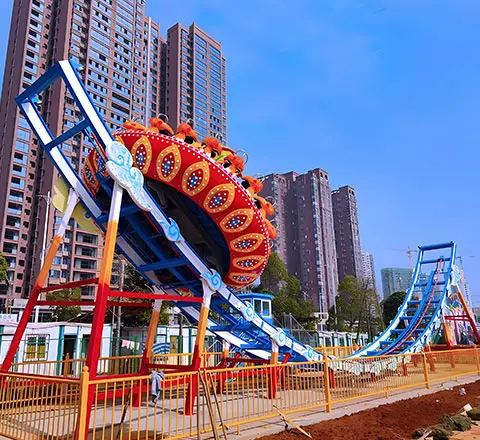


When planning to add a new attraction or upgrade your Family Entertainment Center (FEC), facing a dazzling array of equipment options, one critical question inevitably comes to mind: exactly how much does it cost to buy an amusement park ride? More importantly, is the ride I want actually within my true project budget?
Every park investor prioritizes cost control, but the initial sticker price you see in a supplier’s catalog is rarely your final expense. To avoid severe budget overruns before opening day, you must look beyond the base equipment and calculate the Total Cost of Ownership (TCO). This comprehensive 2026 guide breaks down realistic budget brackets by ride category, exposes 6 hidden pricing factors (including the dangerous trap of second-hand rides), and provides a proven checklist to translate a basic factory quotation into a fully operational opening budget.
Amusement Park Ride Prices at a Glance
Start your budgeting process by categorizing the attractions based on the guest experience. Because different types of amusement park rides require vastly different capital investments based on their engineering complexity and footprint, the broad groups below provide a realistic initial financial orientation.
| Ride category | Examples in this guide | Indicative price for selected models |
| Kiddie rides | Mini pirate ships, small flying chairs and compact carousels | US$5,000–20,000+ |
| Family rides | Carousels, standard pirate ships and wave swingers | US$7,000–150,000 |
| Thrill rides | Small Disco Tagada rides through giant pendulum rides | US$5,000–1.5 million |
(Note: These are price ranges for selected models, not category averages or maximum prices. A large observation wheel or custom roller coaster needs a separate project budget.)

Common Amusement Rides Cost
For common amusement rides, the physical scale and passenger capacity are often the missing variables in the price equation. The following table identifies what each unusually wide product range actually covers:
| Ride | Indicative price | What the range covers |
| Carousel / merry-go-round | US$7,000–150,000 | Compact models through selected large double-deck carousels. Size, seating figures and decoration affect the price. |
| Pirate ship / Viking ship | US$5,000–60,000 for published standard models | An 8–12 seat mini ship through larger 40+ seat versions. Extensive custom theming may cost more. |
| Ferris wheel | US$8,000–1.5 million across published examples | Small wheels through giant models. A custom 120 m observation wheel requires a project-specific quotation. |
| Flying chair / wave swinger | From about US$5,000 for selected small models | A published 12-seat example costs around US$5,000–9,000. Larger conventional rides and tall swing towers need separate specifications and prices. |
| Pendulum ride | US$5,500–1.5 million | Mini models through giant 360° rides. One published reference range for 16–24 seat models is US$22,000–35,000. |
| Roller coaster | US$10,000–200,000 for selected small models; US$1 million–5 million for some larger thrill coasters | Extreme custom projects can reach US$10 million–50 million+. Those upper figures may describe the broader construction project, rather than an equipment-only factory quote. |
| Disco Tagada ride | US$5,000–50,000+ | Small models through larger commercial versions; capacity, theming and portability change the quote. |
| Bumper cars | US$980–1,800 per car | This is a vehicle price. A complete arena also needs a suitable power or charging system, playing surface, controls and barriers; request a separate system quotation. |
The prices above are Carnee Rides’ indicative EXW (Ex Works) reference prices, reviewed in September 2026. Final prices depend on the model, specifications and customization. Contact Carnee Rides for a current, itemized quotation. Shipping, installation and site costs are quoted separately.

Why Can Two Similar Rides Have Vastly Different Prices?
Consider a hypothetical procurement scenario: a 10-seat mini pirate ship quoted at $7,000 versus a heavily themed, high-specification 40-seat custom pirate ship approaching $100,000. One has four times the seats, but the proposed budget is fourteen times as high. Where is the discrepancy?
The visual appearance of a fiberglass shell often masks the underlying mechanical reality. To understand the true value of an amusement park equipment quotation, you must look at six critical cost drivers:
1. The Trap of New vs. Used Amusement Rides
The condition of the ride is a massive, yet often misunderstood, price factor. Searching for used carnival rides for sale cheap might yield prices at half the cost of a brand-new model, making it incredibly tempting for buyers on a tight budget. However, this is frequently a false economy.
Used equipment comes with zero quality guarantees, undocumented maintenance histories, and unknown metal fatigue. If you are not an experienced industry insider or a certified ride mechanic, it is remarkably easy to be scammed by unscrupulous brokers. The “hidden costs” of replacing worn cast-steel bearings, conducting mandatory NDT weld inspections, and upgrading obsolete electrical panels to meet modern safety codes will quickly outpace your initial savings—ultimately doing more harm than good to your business. Before making a risky purchase, weigh the long-term ROI and safety liabilities by reading our comprehensive guide on evaluating new vs used amusement rides.
2. Materials & Manufacturing Craftsmanship
The grade of materials used directly dictates the lifespan of the ride. A cheaper manufacturer might use standard Q235 carbon steel and apply a thin layer of cold-electroplating. A premium manufacturer utilizes high-tensile Q345B seamless structural steel combined with hot-dip galvanizing (averaging an 85-micron zinc layer) for supreme outdoor weather resistance. Similarly, a commercial-grade 5-layer FRP (Fiberglass Reinforced Plastic) hull finished with automotive baking paint costs more upfront but lasts over a decade without fading or cracking.
3. Safety Certifications & Compliance Testing
Certification is never optional—it is a legal and insurance prerequisite. Achieving compliance with stringent standards like ASTM F2291, EN 13814, or obtaining CE / TUV marks requires the manufacturer to invest heavily in Non-Destructive Testing (NDT), third-party engineering reviews, and redundant safety mechanisms (like dual-locking restraints). Reputable equipment costs more because the factory absorbs the engineering review fees to ensure the ride is legally insurable in your jurisdiction.
4. Customization & IP Design
A standard model benefits from established molds and streamlined assembly lines. If you require a custom theme—such as specific characters, unique lighting matrices, or custom soundtracks—the factory must invest in new 3D designs, fabricate one-off fiberglass molds, and perform new structural load calculations. This deep level of bespoke manufacturing typically adds 20% to 40% to the base equipment price.
5. Drive Systems & Technological Integration
Modern commercial rides increasingly utilize PLC-based control systems and Variable Frequency Drives (VFD). While a primitive belt-driven motor is cheap, a high-end cycloidal pinwheel reducer paired with a Siemens VFD provides a whisper-quiet, incredibly smooth acceleration profile. These smart technological layers add to the initial quote but pay for themselves rapidly by drastically reducing mechanical wear and maintenance downtime.
6. Source Factory vs. Trading Company Markup
The amusement industry is saturated with intermediary export brokers who pose as manufacturers. If you buy through a middleman, you are paying a 20% to 30% markup solely for their sales service. Partnering directly with a verified source manufacturer like Carnee Rides eliminates the middleman premium while ensuring you have direct access to structural engineers.

EXW, FOB, or CIF: Decoding the Delivery Boundary
An equipment figure without a defined trade term is financially incomplete. EXW, FOB, and CIF do not describe three grades of ride quality; they are Incoterms® that allocate specific delivery tasks, freight costs, and logistics risks between the buyer and the manufacturer.
| Trade Term on Quotation | What It Means for Your Budget |
| EXW (Ex Works) | The factory builds the ride. You arrange pickup, export clearance, ocean freight, and cargo insurance. |
| FOB (Free On Board) | The factory covers costs up to loading the equipment onto the vessel at the departure port. You arrange the onward ocean journey. |
| CIF (Cost, Insurance, Freight) | The factory includes ocean freight and cargo insurance to your destination port. You handle import clearance, duties, and inland trucking. |
Note: Neither FOB nor CIF means the ride is installed or approved for public operation at your park. Insurance scope should also be checked explicitly in the contract.
If Supplier A quotes a wave swinger at $25,000 EXW and Supplier B quotes $31,000 CIF, subtracting the two prices tells you nothing until you calculate the missing ocean freight, port handling, and inland delivery costs for Supplier A.
Additional Costs to Consider Before Ordering Amusement Rides
The most transparent way to estimate the installed cost of an amusement ride is to calculate the capital expenditure (CapEx) by separating expenses into logistical phases. A factory quotation can be perfectly reasonable while your overall project budget remains dangerously incomplete.
Use this worksheet to establish a realistic opening budget:
| Budget Item | What to Confirm Before Ordering | Responsible Party |
| Equipment Purchase | Ride body, PLC control cabinets, restraints, LED lighting, and initial spare parts. | Manufacturer & Buyer |
| Export Logistics | Packing method, container plan, and selected trade term. | Manufacturer / Freight Agent |
| Transport & Import | Ocean freight, arrival charges, import duties, taxes, and inland delivery. | Buyer / Logistics Provider |
| Civil & Ground Works | Geotechnical assessment, deep foundations, anchors, queue area, and fencing. | Local Project Team |
| Power & Utilities | Voltage matching, transformer capacity, heavy cabling, and earthing. | Local Electrical Contractor |
| Assembly & Commissioning | Crane hire, installation crew, factory engineer travel, and trial runs. | Per Installation Contract |
| Regulatory Compliance | Third-party inspections, operating permits, and public liability insurance. | Operator / Local Authorities |
Total Opening Budget = Quoted Equipment + Delivery/Import Costs + Civil Site Works + Installation + Local Acceptance Costs + Opening Spares.
💡 Expert Advice from the Manufacturer:
As a professional manufacturer with over two decades of experience, our strongest advice to buyers is this: When you receive a quotation, you must rigorously cross-check exactly what specific items are included in that price. Do not assume that a cheap sticker price automatically covers your conductive bumper car floor, your PLC control cabinets, or your safety fencing. Misunderstanding the exact supply scope leads to severe budget overruns that can halt your project right before opening day.

Operating Expenses (OpEx): Budgeting Beyond Opening Day
The initial purchase decision is only the beginning. Successful amusement park operators build robust financial models that heavily weigh recurring operational expenses (OpEx).
Here is what you must budget for after the ribbon-cutting ceremony:
1. Labor and Staffing (The Largest Recurring Cost)
In any amusement operation, personnel is the single highest recurring expense. A mid-sized park running 10 to 15 attractions requires ride operators, ticket attendants, safety inspectors, and maintenance crews.
- Cost Optimization: Investing in high-quality rides equipped with smart automation—such as automated safety harness sensors, self-service ticketing kiosks, and automated gating—can significantly reduce the required operators per ride, lowering your annual payroll by 20% to 30%.
2. Routine Maintenance and Asset Lifecycle
Preventative maintenance is not a cost; it is an income-protection strategy. Industry benchmarks recommend budgeting 5% to 8% of the equipment’s replacement value annually for maintenance labor, lubrication, and replacement components (like friction tires and brake pads).
- The Cheap Ride Trap: Operators who buy low-quality rides to save money upfront inevitably face severe mechanical breakdowns. Postponing maintenance or dealing with poorly engineered bearings can result in a massive emergency repair bill and weeks of downtime during your peak summer season—costing exponentially more in lost ticket revenue than a premium ride would have cost originally.
3. Annual Inspections and Liability Insurance
High-traffic mechanical rides require continuous compliance. You must budget for annual state or municipal safety inspection fees. Additionally, your commercial liability insurance premiums will be heavily influenced by the safety record and build quality of your equipment. Rides with recognized international certifications and redundant safety locks command significantly lower insurance premiums.
4. Power and Utilities
Modern high-quality rides equipped with Variable Frequency Drives (VFD) and expertly balanced counterweight systems reclaim kinetic momentum, effectively reducing daily industrial electrical consumption by up to 25% compared to older, direct-drive induction motors.
How to Audit and Compare Manufacturer Quotations
To avoid costly miscommunications, send the exact same procurement brief to every manufacturer on your shortlist. State your country, indoor/outdoor designation, available footprint, target demographic, desired capacity, local three-phase voltage, and your intended opening date.
Compile the responses into a strict comparison matrix:
| Evaluation Field | The Engineering Question to Ask |
| Exact Specifications | Are the seat count, dynamic movement, and clearance envelopes completely identical? |
| Materials & Finishes | Is the structure made of seamless Q345B steel? Is it hot-dip galvanized or only cold-electroplated? |
| Controls & Accessories | Are PLC cabinets, multi-lock restraints, LED packages, and safety barriers included? |
| Engineering Records | Will the factory provide foundation loads, electrical schematics, and NDT weld test reports? |
| Delivery Boundary | Is the quotation based on EXW, FOB, or CIF terms? How many shipping containers are required? |
| Installation Scope | Who provides installation engineers, local crane services, and final commissioning approval? |
By asking these specific engineering questions, you shift the focus from a simple price tag to the true value and safety of the equipment. A reputable manufacturer will always answer these questions transparently. If you need a comprehensive and honest quotation for your park project, contact our engineering team today—we provide detailed technical specs and pricing breakdowns with zero hidden costs.

Frequently Asked Questions (FAQ)
Request a Factory-Direct Quote for Your Project
An amusement ride quotation only becomes a viable business tool when it clearly defines the equipment you will receive and the exact work still required before you can safely open to the public.
Carnee Rides is a verified Chinese amusement ride manufacturer serving international theme park projects since 1998. We provide end-to-end support spanning 3D design, heavy manufacturing, safety testing, export logistics, installation guidance, and lifetime after-sales service.
Contact Carnee Rides today with your preferred ride type, site dimensions, target capacity, local voltage, and target opening date. Our engineering team will recommend the optimal model and prepare an itemized, factory-direct technical quotation to ensure your project’s financial success.


