
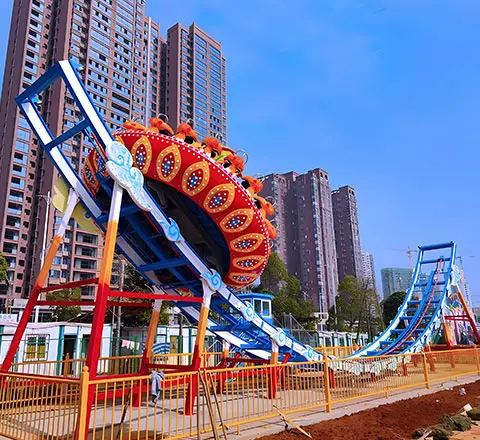


Yes, Tagada rides can be safe when they are built by a qualified manufacturer, certified to the right safety standards, installed correctly, inspected regularly and operated by trained staff. However, a Tagada ride is not a passive family ride. It is a spinning, bouncing and tilting amusement ride with strong rider movement, so safety depends on more than the machine itself.
The real answer is:
A Tagada ride is safe only when equipment quality, operator control, rider rules and maintenance discipline all work together.
This is why buyers should not judge Tagada ride safety only by appearance, price or video performance. A well-built and professionally operated Disco Tagada ride can be a popular thrill attraction for amusement parks, carnivals, funfairs and entertainment centers. A low-quality or poorly operated ride can create serious rider risk.
This guide explains how a Tagada ride works, why it is controversial, what makes it safe or dangerous, what safety features buyers should check, who should not ride it, how operators should inspect it and how to choose a reliable Tagada ride manufacturer.
Are Tagada Rides Safe? The Short Answer
Tagada rides are safe under controlled commercial conditions, but they require stricter operation than many ordinary flat rides.
A disco tagada ride usually has a large circular bowl-shaped platform. Riders sit around the edge, facing the center. During operation, the platform rotates, tilts and bounces with music. Unlike many amusement rides, most traditional Tagada rides do not use individual seat belts or over-the-shoulder restraints. Riders rely on the curved bowl shape, padded seating, handrails, body position and operator-controlled motion.
That design is exactly why people enjoy the ride. The bouncing and sliding sensation creates excitement. But it is also why safety depends heavily on:
- Correct platform speed
- Controlled bouncing intensity
- Strong handrails
- Soft padding
- Non-slip surfaces
- Proper rider posture
- Trained operators
- Daily inspection
- Regular maintenance
- Clear age and height rules
So, a better question is not simply “Is a Tagada ride safe?” but:
Is this specific tagada disco ride certified, well manufactured, properly maintained and operated within its safe limits?


Why Disco Tagada Rides Are Controversial
Tagada rides are controversial because the ride experience is based on controlled rider movement. Passengers are not locked into a seat in the same way as on a roller coaster or pendulum ride. Instead, the ride creates a shared group experience where riders slide, bounce and hold the rail while the platform moves.
This creates three safety challenges.
First, the rider is more physically involved. Riders must sit properly, hold the handrail and follow the operator’s instructions.
Second, the operator has a strong influence on safety. Speed, bouncing rhythm and ride duration should be controlled according to rider age, crowd behavior and ride condition.
Third, maintenance matters. Tagada rides generate vibration, dynamic loads and repeated motion. If handrails, platform joints, hydraulic or pneumatic systems, electrical parts or padding are not inspected, risk increases over time.
In some markets, Tagada disco amusement rides are heavily restricted, rarely approved or not commonly operated because regulators treat unrestrained spinning rides more cautiously. In other regions, they operate legally under local amusement ride inspection systems. Buyers should always confirm local rules before purchasing or operating a Tagada ride.
How a Tagada Ride Works
A music turntable ride creates motion through three main actions:
| Motion Type | What It Does | Safety Requirement |
| Rotation | The platform spins around the center | Speed must stay within rated limits |
| Tilting | The bowl angle changes during operation | Operator must control rider balance |
| Bouncing | The platform creates vertical motion | Intensity must match the rider group |
The key safety principle is controlled motion. The ride should feel exciting, but the movement should not exceed the manufacturer’s rated operating range.
A professional tagada amusement ride should include a control system that allows the operator to manage ride intensity. The operator should be able to slow down, stop the ride or use emergency stop when unsafe rider behavior appears.

What Makes a Tagada Ride Safe or Dangerous?
A tagada fair ride is not safe or unsafe only because of its concept. The real safety difference comes from manufacturing quality, operation discipline and maintenance.
1. Equipment Quality
A safe Crazy Round Disco ride starts at the factory. The structure must be strong enough for repeated commercial operation. Welding quality, steel grade, platform design, drive system, control cabinet, handrails and padding all affect long-term safety.
Low-quality rides may look similar in photos, but hidden differences can include:
- Thinner steel
- Poor welding
- Weak platform support
- Low-grade motors
- Poor electrical protection
- Inadequate handrail structure
- Thin padding
- Weak surface treatment
- No technical documentation
- No real certification support
For buyers, the cheapest Tagada ride is not always the safest or most cost-effective choice.
2. Operator Control
A well-built ride still needs a trained operator. The operator should control the rhythm, speed and intensity of the ride according to real-time rider behavior.
Unsafe operation may include:
- Running too fast for young or first-time riders
- Extending the ride cycle too long
- Allowing riders to stand
- Ignoring riders who do not hold the rail
- Allowing overcrowding
- Continuing operation when abnormal noise or vibration appears
- Not using emergency stop when needed
For disco tagada rides, the operator is part of the safety system. A skilled operator keeps the ride exciting but controlled.
3. Rider Behavior
Rider behavior is a major safety factor. Riders must understand that a Tagada ride is not a passive ride. They should sit properly, keep their hands on the rail, avoid standing and follow all instructions.
Common unsafe rider behaviors include:
- Standing during operation
- Letting go of the handrail
- Pushing other riders
- Sitting loosely without bracing
- Moving toward the center
- Trying to perform tricks
- Ignoring operator instructions
- Riding while physically unsuitable
Operators should clearly explain rules before each ride cycle, especially at carnivals, funfairs and temporary events where many riders may be first-time users.
4. Maintenance and Inspection
Tagada disco rides experience vibration, repeated loading and frequent movement. Over time, components may loosen, wear or corrode.
High-risk areas include:
- Handrails
- Platform joints
- Drive components
- Hydraulic or pneumatic systems
- Bearings
- Fasteners
- Electrical cabinet
- Emergency stop system
- Non-slip surface
- Padding
- Safety fence and gate
Outdoor, coastal and humid locations require more frequent inspection because salt air and moisture can accelerate corrosion.

What a Safe Commercial Tagada Ride Should Include
A commercial disco tagada turntable ride should include multiple safety layers.
| Safety Feature | Why It Matters |
| Strong steel structure | Supports repeated commercial operation |
| Reliable welding | Reduces structural fatigue risk |
| Emergency stop system | Allows fast response to unsafe conditions |
| Speed control | Helps match intensity to rider group |
| Strong handrails | Helps riders keep balance |
| Soft padding | Reduces impact during movement |
| Non-slip platform | Reduces slipping during boarding and riding |
| Safety fence | Keeps spectators outside the ride area |
| Protected electrical cabinet | Reduces electrical and moisture risks |
| Clear warning signs | Helps riders understand restrictions |
| Operation manual | Supports staff training |
| Maintenance schedule | Supports long-term safe operation |
Safety should be designed into the ride, not added only after installation.

Safety Standards and Certification Buyers Should Check
For buyers in international markets, certification and technical documentation are important. EN 13814 is widely used as a reference standard for amusement rides and amusement devices, covering requirements related to design, manufacture, operation, maintenance, inspection and testing.
When evaluating a tagada disco ride supplier, buyers should ask for:
- CE-related documents if required by the target market
- EN 13814-related technical documentation where applicable
- Structural design information
- Electrical system information
- Material and welding quality information
- Operation manual
- Maintenance manual
- Inspection checklist
- Packing and installation guidance
- Spare parts support
- After-sales service policy
A reliable amusement ride manufacturer should be able to explain what documents are available and which standards are relevant to your destination country.
Do not rely only on marketing words such as “high quality” or “factory price.” Ask for real documentation.

Safe Tagada Ride vs Unsafe Disco Tagada Ride
| Factor | Safer Tagada Ride | Higher-Risk Tagada Ride |
| Manufacturer | Verified factory | Unknown trader or unverified supplier |
| Structure | Strong steel frame | Thin or unclear material |
| Welding | Checked and controlled | Visual-only or inconsistent |
| Control system | Speed and emergency control | Basic or unclear control system |
| Handrails | Strong and properly fixed | Loose or weak handrails |
| Padding | Thick and replaceable | Thin, hard or damaged padding |
| Documentation | Manuals and inspection guidance | Little or no documentation |
| Certification support | Available when required | Cannot provide documents |
| Operation | Trained staff | Untrained operator |
| Maintenance | Recorded schedule | Repairs only after failure |
This table is important for investors. A safe Tagada project is not only about buying the ride. It is about choosing the right supplier and operating it correctly.

Who Should Not Ride a Tagada Ride?
Even when a music turntable disco ride is properly manufactured and operated, not everyone should ride it.
Operators should restrict riders who are:
- Too young or too small for the ride
- Below the posted height requirement
- Pregnant
- Under the influence of alcohol or drugs
- Suffering from heart conditions
- Suffering from back, neck or spinal problems
- Recovering from surgery
- Unable to hold the handrail firmly
- Unable or unwilling to follow instructions
Standard Tagada rides are usually more suitable for teenagers and adults. Smaller or mini Tagada models may be used for younger riders only when the ride intensity, speed and local rules allow it.
For more details, read our guide on what age is appropriate for Tagada rides.


Tagada Ride Safety Rules for Riders
Operators should clearly explain rider rules before every cycle.
Recommended rider rules include:
| Rider Rule | Purpose |
| Sit properly before the ride starts | Helps maintain balance |
| Hold the handrail firmly | Reduces sliding and loss of control |
| Do not stand during operation | Reduces fall and ejection risk |
| Do not push other riders | Keeps group movement controlled |
| Do not move toward the center | Reduces impact risk |
| Keep feet inside the riding area | Avoids unsafe contact |
| Follow operator instructions | Allows fast safety response |
| Wait until the ride fully stops before exiting | Reduces slip and collision risk |
| Do not ride if physically unsuitable | Protects high-risk riders |
These rules should be shown on signage and enforced by staff.
Daily Safety Inspection Checklist for Operators
A daily inspection checklist is essential for safe operation.
Before opening, operators should check:
| Inspection Item | What to Check |
| Emergency stop | Test response before operation |
| Control panel | Check buttons, indicators and speed control |
| Handrails | Confirm they are tight and undamaged |
| Platform surface | Check for slipping, cracks or loose parts |
| Padding | Check for torn, missing or exposed hard areas |
| Safety fence | Confirm gates and barriers are secure |
| Electrical cabinet | Check moisture, smell, heat or loose wiring |
| Fasteners | Check visible loose bolts and joints |
| Drive system | Listen for abnormal noise |
| Warning signs | Confirm signs are clear |
| Trial run | Run the ride at low speed before opening |
| Maintenance record | Record problems and repairs |
Daily inspection should be mandatory, not optional.

Weekly and Periodic Maintenance
In addition to daily checks, operators should schedule deeper inspections.
Weekly Checks
- Check high-stress fasteners
- Inspect handrail connections
- Check platform surface wear
- Inspect electrical cabinet for moisture
- Check safety fence and gates
- Lubricate required moving parts
- Review operator feedback
Monthly or Seasonal Checks
- Inspect structural joints
- Check drive system condition
- Check hydraulic or pneumatic components
- Inspect padding and replace damaged sections
- Test emergency stop repeatedly
- Review operation records
- Check corrosion in outdoor areas
Annual Inspection
A full structural and electrical inspection should be performed by qualified personnel according to local regulations and manufacturer guidance. High-use sites, coastal sites and humid tropical locations should consider more frequent inspections.
Weather and Site Conditions
Weather and site environment also affect safety.
Tagada rides should not operate during unsafe weather conditions such as heavy rain, strong wind, lightning or unstable ground conditions. The ride should be installed on a stable and suitable foundation.
Special attention is needed for:
- Coastal areas with salt air
- Tropical regions with high humidity
- Outdoor parks with heavy rain
- Temporary carnival sites
- Sites with uneven ground
- Locations with poor drainage
For coastal installations, anti-corrosion treatment and more frequent inspection are important. Salt air can affect steel, electrical cabinets and fasteners over time.
Tagada Ride Safety for Buyers: What to Ask Before Purchase
Before buying a Tagada ride, buyers should ask the supplier the following questions:
| Buyer Question | Why It Matters |
| Are you a real manufacturer or a trading company? | Helps verify production control |
| What steel structure is used? | Affects strength and service life |
| How is welding checked? | Affects structural reliability |
| Can you provide CE or EN 13814-related documents? | Supports compliance in many markets |
| Does the ride include emergency stop? | Essential for safe operation |
| Can speed and motion be controlled? | Helps match different rider groups |
| What padding material is used? | Affects rider comfort and impact protection |
| Is the platform non-slip? | Reduces slipping risk |
| Do you provide operation manuals? | Helps train staff |
| Do you provide maintenance schedules? | Supports long-term safety |
| Are spare parts available? | Reduces downtime |
| Can the design be customized? | Supports brand and site requirements |
| Can I inspect the factory? | Builds buyer confidence |
The supplier’s answer to these questions is often more important than the price difference.

Why Buyers Should Not Choose a Tagada Ride by Price Alone
Many buyers receive different quotations from different suppliers. Some may choose the cheapest option. That can be risky for a ride like Tagada, because hidden quality differences directly affect safety.
A cheaper Tagada ride may reduce cost by using:
- Lower-grade steel
- Weaker welding
- Smaller motors
- Basic control system
- Thinner padding
- Lower-quality electrical parts
- Poor surface treatment
- Limited documentation
- No real after-sales service
- No spare parts plan
For a high-motion amusement park ride, these differences matter.
A responsible buyer should compare total value:
- Material quality
- Structural design
- Control system
- Safety configuration
- Certification support
- Technical documentation
- Manufacturer experience
- Design ability
- Factory inspection support
- Spare parts
- After-sales service
The right question is not:
Which Tagada ride is cheapest?
The better question is:
Which Tagada ride can operate safely, reliably and profitably for years?


Commercial Value of a Safe Tagada Amusement Ride
In markets where Tagada rides are legal and properly regulated, a certified and well-operated Tagada ride can be a strong commercial attraction.
Its advantages include:
- High visual impact
- Strong music and lighting atmosphere
- Compact footprint compared with large thrill rides
- Broad appeal among teenagers and adults
- High repeat-ride potential
- Good fit for carnivals, funfairs and amusement parks
- Strong night-time entertainment effect
- Good photo and video sharing potential
Typical Tagada ride models may carry 20–40 riders per cycle, depending on size and design. With short cycle times and strong visitor interest, the ride can support attractive ticket revenue when placed in a high-traffic location.
However, commercial success must be built on safe operation. A ride that creates safety concerns will damage customer trust, operator reputation and long-term revenue.
Why Choose Carnee Rides for Tagada Funfair Ride Projects
Carnee Rides provides commercial Tagada rides and amusement ride solutions for theme parks, carnivals, funfairs, amusement parks, entertainment centers and tourist attractions.
Our support can include:
- Commercial Tagada ride model selection
- Different seating capacity options
- Custom theme, color, lighting and logo design
- 2D and 3D design support for customized projects
- Factory-direct manufacturing
- Factory inspection support
- Safety configuration advice
- Operation and maintenance documentation
- Spare parts support
- Export packing and shipping support
- After-sales service
Carnee Rides focuses not only on selling a ride, but also on helping buyers choose the right configuration for their market, visitor group and operating conditions.
If you are planning a Tagada ride project, send us your country, site size, target riders, preferred capacity and local safety requirements. Our team can recommend a suitable configuration and quotation.

FAQ About Tagada Ride Safety
Conclusion: A Tagada Ride Is Safe Only When the Whole System Is Safe
A Tagada ride can be a safe and profitable amusement ride, but it is not a ride that should be purchased or operated casually. The safety of a Tagada ride depends on the full system: certified manufacturing, strong structure, controlled motion, trained operators, rider rules, daily inspection and long-term maintenance.
For buyers, the most important decision is not simply whether to buy a Tagada ride. It is whether to buy from a reliable manufacturer that can provide proper design, documentation, safety configuration and after-sales support.
Carnee Rides can help you choose a suitable Tagada rides for sale for your amusement park, carnival, funfair or entertainment project. Contact us today for model recommendations, customization options and a factory-direct quotation.


