
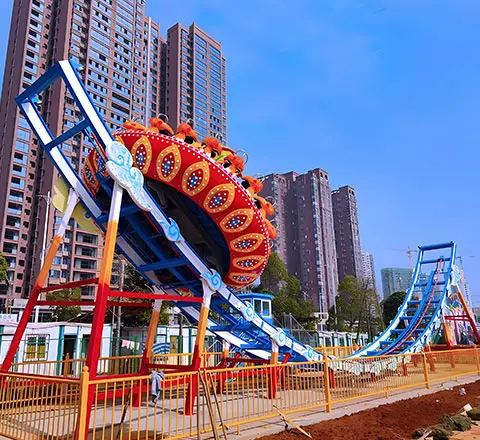


A Complete Explanation of the Disco Tagada Ride Working Principle
The Disco Tagada ride is one of the most energetic and interactive attractions commonly found in amusement parks, funfairs, and carnival events.
Unlike traditional seated amusement rides, the Tagada ride relies on rotation, controlled motion, and rider interaction to create its unique experience. Understanding how the Tagada disco ride works helps operators, buyers, and park planners better evaluate safety, ride quality, and long-term performance.


What Is a Tagada Ride?
A Tagada ride is a Rotor amusement ride where passengers sit around the edge of a large rotating turntable. Riders are not restrained by individual seat belts but are supported by soft padded seating, safety rails, and controlled motion design.
Common Tagada ride names and variants include:
- Crazy Dance Disco Ride
- Disco Tagada ride
- Disco Tagada amusement ride
- Crazy round disco ride
- Disco Tagada Turntable Ride
- Tagada Funfair Ride
Tagada rides are widely used in:
- Amusement parks
- Carnivals and funfairs
- Temporary events and fairs
- Disco-style amusement zones
Core Components of a Disco Tagada Ride
To understand the working principle, it is essential to first look at the main structural components.
Rotating Turntable Platform
- Large circular steel turntable
- Anti-slip surface coating
- Padded seating arranged in a ring
- Designed to withstand continuous rotational force
The turntable is the core element that directly interacts with passengers.
Drive System (Electric / Hydraulic Combination)
Depending on the design, a tagada disco amusement ride may use:
- Electric motor with gearbox for rotation
- A hydraulic system to create vertical or tilting motion
- Controlled torque and speed output for smooth operation
This system ensures stable rotation and adjustable speed, rather than uncontrolled spinning.
Support Structure and Base Frame
- Heavy-duty steel base frame
- Anchored to the foundation for stability
- Designed to absorb vibration and dynamic load during operation
This structure ensures safety even during high-energy motion sequences.


The Working Principle of a Tagada Ride
How Rotation Creates the Core Experience
When the ride starts, the electric drive system rotates the turntable around its central axis. As rotational speed increases, centrifugal force acts on the riders, pushing them outward toward the padded seating.
This force is calculated and controlled, not random, allowing riders to experience excitement without losing balance.
Vertical and Tilting Motion Effects
In addition to rotation, the hydraulic system introduces:
- Periodic up-and-down movement
- Slight tilting angles of the platform
This combination creates irregular motion patterns, making riders feel:
- Sudden weight shifts
- Momentary weightlessness
- Unpredictable body movement
These effects are what differentiate the Tagada fair ride from simple rotating amusement park rides.
How Tagada Ride Speed Is Controlled
The Tagada ride speed is fully adjustable through the control system:
- Operators can increase or reduce the rotation speed
- Motion intensity can be adjusted for different audiences
- Extreme disco tagada modes use higher speed and motion frequency
All changes are made through programmed control logic rather than manual randomness.
Why the Tagada Ride Feels So Exciting
The excitement comes from several combined factors:
- No individual seat belts, allowing natural body movement
- Controlled centrifugal force pushes riders outward
- Rhythmic changes in speed and motion
- Music and lighting synchronized with ride operation
This creates a dance-like interactive experience, especially popular in disco-style amusement environments.
Safety System and Control Logic of a Tagada Disco Ride
Although the ride appears intense, safety is built into every stage of the design.
Control System and Operator Panel
- Programmable control system
- Emergency stop function
- Speed and motion limit protection
- Operator-controlled ride sequences
Ride Surface and Safety Design
- Anti-slip platform surface
- Soft padded seating and side cushions
- Circular safety fence around the platform
- Clearly defined rider behavior guidelines
Operational Safety and Inspection
Before daily operation, operators typically check:
- Hydraulic pressure levels
- Motor and gearbox condition
- Control system response
- Emergency stop function
These procedures ensure stable and safe operation throughout the day.
Different Types of Tagada Rides and Their Working Differences
Although all Tagada rides share the same core working principle—a rotating turntable combined with controlled motion and centrifugal force—their actual performance and ride experience vary significantly depending on size, capacity, and configuration.
At Carnee Rides, Disco Tagada rides are available in multiple models to suit different park scales, audiences, and operating environments.


Large Tagada Rides (30–40 Seats)
Large Disco Tagada rides are designed for high-capacity operation and strong visual impact, making them suitable for outdoor amusement parks, theme parks, and large carnival grounds.
Typical characteristics include:
- The turntable diameter is usually over 6 meters
- Seating capacity of 30 to 40 passengers
- Higher rotational inertia and stronger centrifugal force
- More dynamic motion sequences and wider speed adjustment range
Because of the larger platform and higher load, these models use reinforced structural frames and higher-rated drive systems, ensuring stable operation even under intense ride programs. The working principle remains the same, but motion amplitude and speed settings are increased to deliver a more powerful thrill experience.

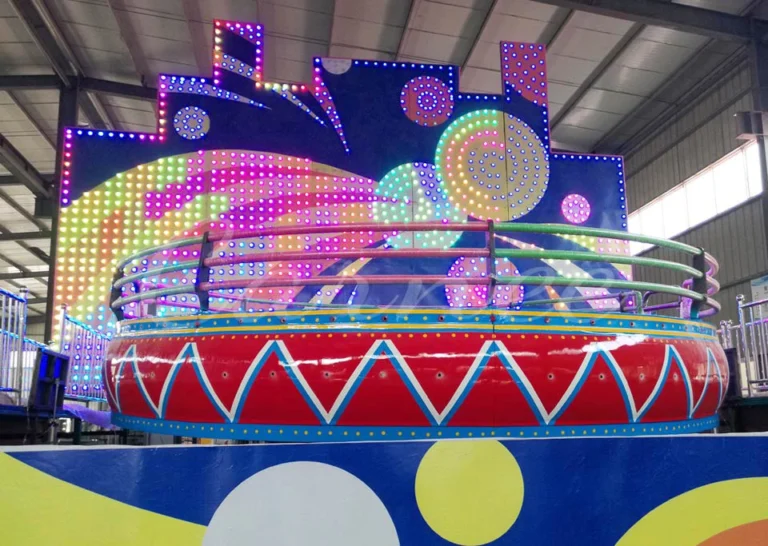
Medium Tagada Rides (16–24 Seats)
Medium-sized Tagada rides offer a balance between excitement and operational flexibility. These models are commonly used in regional amusement parks, funfairs, and mixed-age venues.
Key features include:
- Moderate platform diameter
- Seating capacity of 16 to 24 passengers
- Adjustable ride speed suitable for both teenagers and adults
- Lower space and foundation requirements compared to large models
From a working principle perspective, the rotational mechanism and control logic are identical to larger rides. However, parameters such as rotational speed, motion frequency, and hydraulic movement range are optimized to ensure stable performance with reduced operational load.
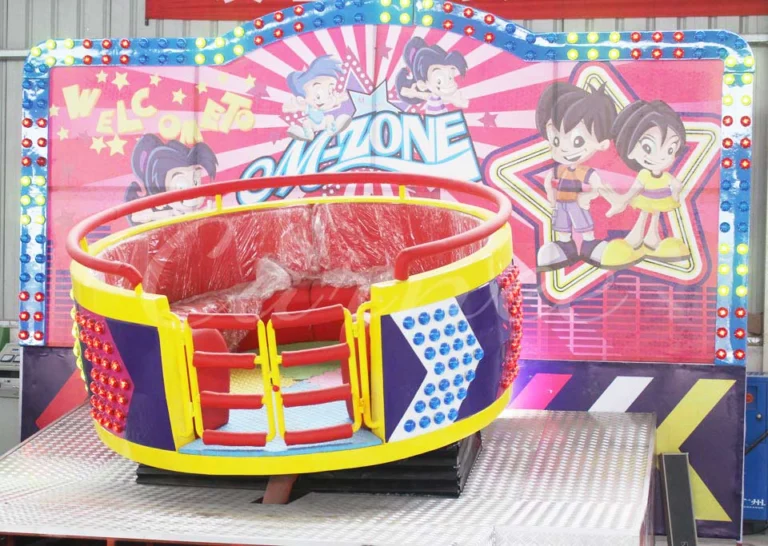
Small and Mini Tagada Rides (8–12 Seats)
Mini Tagada rides are designed for compact spaces, indoor venues, shopping malls, and family entertainment centers.
Main characteristics include:
- Smaller turntable diameter
- Seating capacity of 8 to 12 passengers
- Reduced rotational speed and gentler motion patterns
- Lower power consumption and simplified installation
Although the experience is milder, mini Tagada rides still follow the same fundamental working principle. The difference lies in scaled-down mechanical components and conservative control settings, making them suitable for younger riders or venues with strict height and noise limitations.
Visual and Thematic Variations (Disco, UFO, Music Tagada)
In addition to size-based differences, Tagada rides may also vary in appearance and atmosphere, such as:
- Disco-themed Tagada rides
- UFO-style Tagada rides
- Electric music Tagada rides with enhanced lighting and sound systems
These variations do not change the mechanical working principle. Instead, they enhance the rider experience through synchronized lighting, music, and decorative elements while maintaining the same core motion system and safety logic.


Manufacturer Perspective: Why Understanding the Working Principle Matters
From a tagada ride manufacturer’s standpoint, understanding the working principle is essential for:
- Structural strength design
- Motion control accuracy
- Safety margin calculation
- Ride lifespan and maintenance planning
Different amusement equipment manufacturers may produce very different ride experiences, even with similar-looking Tagada rides, depending on engineering quality and control system design.
(See more: Top 10 Amusement Park Rides Manufacturers in China (2026) )
At Carnee Rides, the working principle is carefully considered from the design stage to ensure safe, stable, and consistent ride performance across different operating environments.
Final Thoughts
The Tagada ride works through a carefully engineered combination of rotation, controlled motion, and programmable control logic. What feels spontaneous and unpredictable to riders is, in fact, the result of precise mechanical and hydraulic coordination.
Understanding how a disco Tagada ride works helps park operators, buyers, and investors better evaluate ride quality, safety, and long-term value—far beyond surface-level excitement.
(Learn more: Everything You Need to Know About Tagada Ride: The Ultimate FAQ Guide 2026 )


