
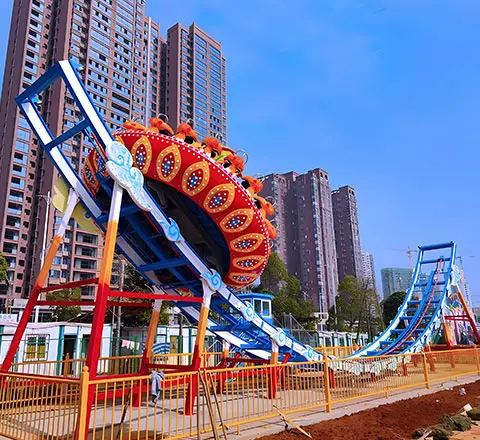


Flat rides are some of the most important attractions in amusement parks, theme parks, carnivals, family entertainment centers, scenic areas, and resorts. Compared with large roller coasters, flat rides are usually more flexible in layout, easier to combine with different visitor groups, and suitable for building a balanced attraction mix.
For park owners and investors, choosing flat rides is not only about fun. It is also about visitor flow, age group, thrill level, installation space, operation cost, maintenance, safety documents, and long-term business value.
In this guide, Carnee Rides shares 15 popular flat rides for amusement parks, including their names, picture ideas, types, visitor appeal, and buying tips. As a Chinese amusement rides manufacturer with more than 20 years of production and sales experience, Carnee Rides helps global customers choose suitable amusement rides based on land size, target visitors, budget, installation conditions, and long-term operation needs.
This article is written for amusement park owners, theme park investors, carnival operators, family entertainment center owners, resort developers, and buyers looking for flat rides for sale from a reliable amusement park rides manufacturer.

What Are Flat Rides?
Flat rides are one of the main types of amusement park rides, usually operating within a fixed ground area and creating motion through spinning, swinging, lifting, tilting, bouncing, rotating, or interactive movement.
Common flat rides include carousels, Ferris wheels, tea cup rides, bumper cars, pirate ships, flying chairs, pendulum rides, Tagada rides, octopus rides, and many other non-coaster amusement rides.
In the amusement industry, the term “flat rides” is sometimes used broadly. Some attractions, such as amusement park trains and go-karts, are not traditional flat rides in a strict technical sense, but park owners often plan them together with flat ride areas as part of a balanced non-coaster attraction mix.
Flat rides matter because they can serve different visitors in one park:
- Children need gentle, colorful, parent-friendly rides.
- Families need safe and repeatable attractions.
- Teenagers need medium and high-thrill experiences.
- Scenic areas need visually attractive landmark rides.
- Carnivals need compact, eye-catching, easy-to-operate rides.
A strong amusement park is rarely built around one single ride. In many projects, the better strategy is to combine thrill rides, family rides, kiddie rides, and interactive attractions so that different visitors can find something suitable to enjoy.

Common Types of Flat Rides
Before looking at the top 15 flat rides list, it is useful to understand the main types of flat rides used in amusement parks and carnivals.
Thrill Flat Rides
Thrill flat rides create stronger movement, higher speed, greater height, or more intense rotation. Examples include pendulum rides, drop towers, Top Spin rides, Tagada rides, and pirate ship rides. These rides are suitable for teenagers, young adults, and visitors looking for excitement.
Family Flat Rides
Family flat rides are designed for a wider age range. They usually have moderate motion, easy loading, and strong visual appeal. Examples include Ferris wheels, carousels, tea cup rides, flying chairs, and bumper cars.
Kiddie Flat Rides
Kiddie flat rides are designed for younger children. They usually feature smaller sizes, lower height, gentle motion, bright colors, and cartoon-style themes. Examples include mini Ferris wheels, kiddie carousels, mini pirate ships, kiddie flying chairs, and mini trains.
Spinning Flat Rides
Spinning flat rides use circular or rotating motion to create fun and excitement. Examples include tea cups, octopus rides, Scrambler rides, Tagada rides, and Disco rides.
Interactive Flat Rides
Interactive rides allow visitors to control, compete, or participate more actively. Bumper cars and go-karts are typical examples. These rides are especially popular in family entertainment centers and parks targeting repeat visits.
Carnival Flat Rides
Carnival flat rides are often compact, visually strong, and easy to recognize. Classic examples include Tilt-A-Whirl, Scrambler, Paratrooper, Round-Up, Zipper, and Carousel. Many old carnival ride names are still searched today because these rides are familiar and memorable.
Top 15 Flat Rides Names and Pictures at a Glance
If you are looking for amusement park rides names and pictures, the table below gives a quick overview of popular flat rides used in amusement parks, theme parks, carnivals, resorts, and family entertainment centers.
| No. | Flat Ride Name | Type | Best For | Thrill Level |
| 1 | Bumper Cars | Interactive family ride | FECs, indoor parks, amusement parks | Low to medium |
| 2 | Pirate Ship Ride | Family thrill ride | Parks, carnivals, and outdoor ride zones | Medium |
| 3 | Carousel Ride | Classic family ride | Children’s parks, family areas, malls | Low |
| 4 | Ferris Wheel | Scenic family ride | Resorts, parks, landmarks, scenic areas | Low |
| 5 | Flying Chair Ride | Spinning family thrill ride | Carnivals, youth parks, and outdoor parks | Medium |
| 6 | Pendulum Ride | High-thrill ride | Theme parks, thrill zones | High |
| 7 | Tagada Ride | Spinning carnival ride | Carnivals, youth parks, outdoor parks | Medium to high |
| 8 | Tea Cup Ride | Family spinning ride | Kids’ areas, family parks, malls | Low |
| 9 | Octopus Ride | Rotating flat ride | Family thrill areas, carnivals | Medium |
| 10 | Happy Swing Ride | Family swing ride | Kids’ parks, malls, FECs, carnivals | Low to medium |
| 11 | Top Spin Ride | High-thrill flat ride | Large parks, thrill ride zones | High |
| 12 | Drop Tower Ride | Vertical thrill ride | Theme parks, thrill zones | High |
| 13 | Crazy Rabbit Ride | Self-control bouncing ride | Family parks, malls, carnivals | Low to medium |
| 14 | Amusement Park Train | Family/scenic attraction | Resorts, parks, scenic areas | Low |
| 15 | Go Kart Ride | Interactive attraction | FECs, amusement parks, resorts | Medium |
The ranking is not a universal rule. The best flat rides for your park depend on your visitor age group, park size, budget, location, indoor or outdoor site conditions, and local safety requirements. The following sections explain each ride in more detail.


1. Bumper Cars
Bumper cars are one of the most popular interactive flat rides for amusement parks and family entertainment centers. Visitors can drive, turn, chase, and bump into each other in a controlled area, making the ride simple to understand and easy to enjoy.
For park owners, bumper cars are attractive because they serve a wide visitor group. Children, teenagers, parents, and groups of friends can all participate. Unlike passive rides where visitors only sit and watch, bumper cars create interaction and repeat play.
Bumper cars are especially suitable for indoor parks, shopping mall entertainment centers, family entertainment centers, and small-to-medium amusement parks. Buyers should consider the arena size, floor type, car quantity, power system, safety barrier, charging method, and maintenance requirements before purchase.
As an amusement rides manufacturer, Carnee Rides offers a range of bumper cars for sale for indoor and outdoor projects, with custom options for colors, car shell designs, lighting, and arena layout planning.

2. Pirate Ship Ride
The pirate ship ride is a classic family thrill ride. It swings back and forth like a ship on waves, giving visitors a feeling of height, speed, and light weightlessness without being as extreme as some high-intensity thrill rides.
This ride is popular because it has a strong visual impact. Even people outside the ride can see the ship moving, which helps attract attention inside the park. It is suitable for teenagers, families, outdoor amusement parks, carnivals, and theme parks.
For buyers, important factors include seating capacity, swing angle, motor system, foundation requirements, safety restraints, ride height, and theme design. A smaller pirate ship can fit family parks, while a larger model can work as a stronger visual anchor for outdoor parks.
A pirate ship boat ride is often a practical choice for park owners who want a medium-thrill attraction that is exciting but still acceptable to a broad visitor group.
(If you need a medium-thrill family attraction, explore our pirate ship rides for sale for different capacities and park sizes.)


3. Carousel Ride
The carousel ride, also known as a merry-go-round, is one of the most recognizable amusement park flat rides. It is gentle, colorful, and suitable for children and family visitors. For many parks, a carousel is not only a ride but also a photo spot.
Carousels are widely used in children’s parks, family entertainment centers, shopping malls, outdoor amusement parks, resorts, and tourist areas. They can be designed in different sizes, themes, and styles, from traditional horse carousels to ocean, animal, or fantasy themes.
For buyers, the key points include ride diameter, number of seats, indoor or outdoor use, decorative style, lighting system, music system, installation space, and safety design. A carousel does not need to be extreme to be valuable. Its strength is wide age appeal and repeatability.
For parks targeting families and young children, a carousel is often one of the first flat rides worth considering.


4. Ferris Wheel
The Ferris wheel is the big, round ride commonly seen in amusement parks, scenic areas, and resorts. It offers a slow, elevated view rather than a strong physical thrill. Because of its height and shape, it can also become a visual landmark for the entire park.
Ferris wheels are suitable for amusement parks, tourist attractions, resorts, city parks, seaside areas, and scenic destinations. They appeal to families, couples, children, and visitors who prefer a relaxed experience.
When buying a Ferris wheel, park owners should consider height, cabin number, passenger capacity, wind conditions, foundation design, lighting, loading system, and local inspection requirements. A Ferris wheel usually needs more planning than smaller flat rides, but it can contribute strongly to the park’s image and visitor experience.
Although some people may not classify Ferris wheels as flat rides in the narrowest sense, they are commonly included in non-coaster amusement ride planning.


5. Flying Chair Ride
The flying chair ride, also called a swing chair ride or chair swing ride, creates a light flying experience. As the ride rotates and the seats rise outward, riders feel speed, wind, and height while remaining in an open-air seat.
This ride is suitable for family areas, outdoor amusement parks, carnivals, and theme parks. It offers more excitement than a carousel but is usually less intense than a pendulum or drop tower. That makes it useful for parks that want a medium-thrill flat ride.
Buyers should check ride height, number of seats, rotation speed, suspension system, safety chains or restraints, wind resistance, decorative canopy design, and lighting options. For parks with strong visual theming, the flying chair ride can be customized with different colors and top decorations.
A flying chair ride is a good bridge between gentle family rides and stronger thrill rides.


6. Pendulum Ride
The pendulum ride is a high-thrill flat ride designed for visitors who enjoy height, speed, and strong swinging motion. It usually combines large pendulum movement with rotating seats, creating both visual impact and intense ride sensation.
This ride is best for theme parks, outdoor amusement parks, thrill ride zones, and larger projects targeting teenagers and young adults. It can become one of the most visible rides in a park because of its height and movement.
For buyers, important factors include ride size, passenger capacity, swing angle, foundation requirements, power system, safety restraints, inspection requirements, and maintenance access. A pendulum ride usually requires more space, stronger civil work, and stricter operation management than small family rides.
Park owners should choose pendulum rides based on visitor demand and site conditions, not only because the ride looks exciting.


7. Tagada Ride
The Tagada ride is a classic carnival flat ride. It uses a circular platform that spins, tilts, and bounces, creating an energetic group experience. It is especially popular among teenagers and young visitors who enjoy music, movement, and social interaction.
Tagada rides are suitable for carnivals, outdoor amusement parks, youth entertainment areas, and fairgrounds. They are visually active and can attract crowds because people can easily see the riders’ reactions.
When buying a Tagada ride, park owners should consider platform size, seat arrangement, control system, music and lighting, safety barriers, operator control, and local age or height requirements. Because the ride involves group movement, safe operation and clear rules are very important.
For parks targeting a young visitor group, Tagada can add energy and atmosphere to the ride lineup.


8. Tea Cup Ride
The tea cup ride is a family spinning ride commonly used in children’s areas and family parks. Riders sit inside cup-shaped cabins, and the cups rotate on a larger rotating platform. Some models allow visitors to control the spin of their own cup.
Tea cup rides are suitable for children, families, indoor parks, shopping malls, and outdoor amusement parks. They are easy to recognize and can be designed with candy, fairy tale, ocean, or cartoon themes.
For buyers, important factors include cup number, passenger capacity, rotation speed, rider-controlled steering wheel, platform size, indoor height clearance, and decorative style. The ride should be comfortable enough for families while still providing fun movement for children.
A tea cup ride is a good option for parks that need a colorful, compact, and family-friendly flat ride.


9. Octopus Ride
The octopus ride is a rotating flat ride with multiple arms and cars. As the center rotates, the arms move up and down, and the cars may also rotate, creating layered movement.
This ride is suitable for carnivals, family thrill areas, medium-sized amusement parks, and outdoor ride zones. It is more dynamic than a carousel or tea cup ride but usually less extreme than a large pendulum ride.
Buyers should consider the number of arms, car capacity, movement pattern, rotation speed, foundation, safety restraints, and maintenance access. The octopus theme is also visually attractive, especially for parks with ocean or fantasy themes.
The octopus ride works well when a park needs a medium-thrill attraction that can serve both families and younger thrill seekers.


10. Happy Swing Ride
The Happy Swing Ride is a family-friendly swing attraction designed for children, parents, and casual visitors. Unlike large flying chair rides, it usually has a lower height, softer movement, and more playful theming, making it suitable for indoor and outdoor family entertainment projects.
This ride is especially useful for shopping malls, children’s parks, family entertainment centers, carnivals, and small amusement parks. Its colorful appearance, compact footprint, and gentle swinging motion make it easy for children to accept, while parents can enjoy the ride together or watch comfortably nearby.
For buyers, important factors include cabin quantity, passenger capacity, swing height, ride dimensions, power requirements, safety restraints, theme design, and indoor clearance. A Happy Swing Ride can also be customized with ocean, animal, cartoon, dinosaur, or other child-friendly themes.
For parks that need a gentle but eye-catching family ride, the Happy Swing Ride is a practical replacement for older carnival spinning rides. Carnee Rides offers different swing ride options for indoor malls, outdoor parks, and family entertainment centers.


11. Top Spin Ride
The Top Spin ride is a high-thrill flat ride that rotates riders forward and backward while lifting them into the air. It is designed for visitors who enjoy strong movement, inversion, and a more intense thrill experience.
This ride is suitable for larger amusement parks, theme parks, and thrill zones. It can attract teenagers and young adults, but it may not be suitable for every visitor group. Parks with many families and young children should balance Top Spin rides with gentler attractions.
Buyers should pay close attention to safety restraints, control systems, hydraulic or mechanical structures, maintenance requirements, operator training, foundation design, and inspection documents. High-thrill rides require more careful operation planning than simple family rides.
A Top Spin ride can strengthen a park’s thrill lineup, but it should be selected according to real visitor demand.


12. Drop Tower Ride
The drop tower ride is a vertical thrill ride that lifts passengers to a certain height and then drops them rapidly or in controlled motion. It creates a strong sense of height and free-fall excitement.
Some professionals classify drop towers separately from traditional flat rides, but many park owners still consider them part of their non-coaster thrill ride selection. They are common in theme parks, outdoor amusement parks, and thrill areas.
When buying a drop tower ride, park owners should consider tower height, passenger capacity, braking system, restraint system, foundation, wind conditions, safety control system, and local inspection requirements. Because of its height and intensity, this ride requires careful site planning and operation management.
A drop tower can be a strong visual attraction, but it should be matched with the right visitor group and park size.

13. Crazy Rabbit Ride
The Crazy Rabbit Ride is a self-control family ride that combines spinning, bouncing, and playful cartoon theming. With its rabbit-shaped design, bright colors, and lively movement, it is especially attractive to children and family visitors.
This ride is suitable for amusement parks, shopping malls, indoor playgrounds, family entertainment centers, and carnivals. Compared with large thrill rides, the Crazy Rabbit Ride offers a gentler experience while still giving children a sense of movement, control, and excitement.
For buyers, important factors include ride capacity, number of arms or gondolas, control method, bouncing movement, lighting design, FRP cabin quality, safety restraints, installation space, and indoor or outdoor use. Because it has a strong visual theme, it can also work well as a photo-friendly attraction in children’s areas.
For park owners who want a fresh family ride beyond traditional carousels and mini Ferris wheels, the Crazy Rabbit Ride can be a good choice. It adds motion, color, and interaction to a family ride lineup without requiring the space or intensity of a large thrill ride.

14. Amusement Park Train
An amusement park train is not a traditional flat ride, but it is often planned together with flat ride areas because it supports family visitors, sightseeing, and park circulation. It can be used as both a ride and a transportation attraction.
Amusement trains are suitable for theme parks, resorts, scenic areas, farms, zoos, shopping centers, and family entertainment projects. They are especially useful for larger sites where visitors need a relaxed way to move through the area.
Buyers should consider whether to choose a track train or a trackless train, passenger capacity, route design, turning radius, battery or fuel system, indoor/outdoor use, road surface, safety barriers, and maintenance support.
For parks with families and children, an amusement train can improve visitor experience while also adding a strong visual element.


15. Go Kart Ride
Go-kart rides are interactive attractions often used in amusement parks, resorts, and family entertainment centers. They are not traditional flat rides, but many buyers search for them when planning a broader non-coaster amusement ride area.
Go karts appeal to teenagers, families, corporate groups, and competitive visitors. Compared with passive rides, go-karts allow visitors to control the experience, which can increase repeat participation.
When buying go-karts, park owners should consider track size, indoor or outdoor site conditions, kart type, safety barriers, speed control, charging system, age groups, operator supervision, and maintenance support.
Go-kart rides are a good addition for parks that want an interactive attraction with strong repeat-play potential.
Classic Carnival Flat Ride Names Still Worth Knowing
Many old classic carnival rides are still popular because visitors recognize their names, motion patterns, and nostalgic appearance. Even when modern versions use updated control systems, lighting, and safer structures, the core ride concepts are still based on classic amusement ride designs.
Common classic carnival flat ride names include:
- Tilt-A-Whirl
- Scrambler
- Rotor
- Round-Up
- Paratrooper
- Zipper
- Enterprise
- Carousel
- Ferris Wheel
These rides are popular in fairs, carnivals, and traditional amusement parks because they are simple to understand and easy for visitors to identify. For park owners, classic ride names can also help with marketing because many visitors already know what kind of experience to expect.
However, buyers should be cautious when considering older or refurbished carnival rides. Before purchase, always check the structural condition, control system, safety restraints, maintenance records, spare parts availability, and local inspection requirements. A nostalgic ride can still be a valuable attraction, but only if it meets current amusement ride safety standards and can be operated safely for the long term.
Modern manufacturers can also produce updated versions of classic carnival rides with improved lighting, stronger materials, better control systems, and customized themes.

Thrill Flat Rides vs Family Flat Rides: How to Balance Your Ride Lineup
A common mistake in amusement park planning is choosing rides based only on how exciting they look. Thrill rides are important, but a park also needs family rides, children’s rides, and interactive rides to serve different visitors.
Thrill Flat Rides
Thrill rides such as pendulum rides, drop towers, Top Spin rides, Tagada rides, and pirate ships can attract teenagers and young adults. They create visual movement, excitement, and strong marketing images.
However, thrill rides may have stricter height requirements, higher operation demands, and narrower visitor groups. Not every family visitor will ride them.
Family Flat Rides
Family rides such as carousels, Ferris wheels, tea cup rides, flying chairs, bumper cars, and amusement trains are usually suitable for a wider age range. They may not be as extreme, but they help keep families in the park longer and allow different generations to participate.
Kiddie Flat Rides
Kiddie rides such as mini Ferris wheels, mini trains, kiddie carousels, and small interactive rides are important for parks targeting children. Parents often choose parks based on whether their children have enough safe and enjoyable rides.
A Practical Ride Mix
For a new or medium-sized park, a possible starting point is to combine:
- A few thrill rides for visual impact and young visitors
- More family rides for broad visitor appeal
- Several kiddie rides for children and parents
- Interactive rides, such as bumper cars or go-karts, for repeat participation
This is not a fixed formula. The right mix depends on your land size, local market, ticket model, target age group, and investment plan.
Flat Rides for Kids and Family Visitors
Flat rides for kids should be gentle, colorful, easy to load, and comfortable for parents to watch or join. When choosing kids’ flat rides, park owners should consider more than appearance. Safety design, seat layout, height requirements, restraint type, operator visibility, and local inspection rules are all important.
Popular flat rides for kids and families include:
- Carousel ride
- Mini Ferris wheel
- Tea cup ride
- Mini pirate ship
- Kiddie flying chair
- Mini train
- Bumper cars
- Small convoy ride
- Kiddie rotating rides
For young children, parent-accompany seating can be very useful. Many parents prefer rides where they can sit with their children or stay close during the ride. For indoor projects, buyers should also consider ceiling height, floor load, access doors, ventilation, and noise control.
Before purchasing kiddie flat rides, buyers should confirm applicable standards, safety documents, recommended age range, seat design, emergency stop system, and operator instructions. Requirements may vary by ride model and destination country.

Common Mistakes Park Owners Make When Buying Flat Rides
Buying flat rides is not only about comparing prices. A low initial price can become expensive if the ride does not match the park, lacks proper documents, or has poor after-sales support.
Here are common mistakes park owners should avoid.
1. Choosing Only by Low Price
Price matters, but it should not be the only factor. Buyers should compare structure, materials, safety system, control system, warranty terms, spare parts, installation support, and after-sales service.
2. Ignoring Installation Space
Some rides need more space than the ride footprint itself. Queue lines, fences, operator areas, maintenance access, and safety clearance should also be considered.
3. Underestimating Foundation and Electrical Requirements
Many flat rides require proper foundation work, power supply, grounding, and installation preparation. These costs should be considered before signing the purchase contract.
4. Buying the Wrong Ride for the Visitor Group
A park targeting young families should not choose only high-thrill rides. A park targeting teenagers may need stronger thrill attractions. The ride mix should match the real visitor structure.
5. Forgetting Spare Parts and Maintenance
Buyers should ask about spare parts lists, delivery time, maintenance manuals, and technical support. A ride with no spare parts plan can create unnecessary downtime.
6. Not Checking Safety Documents
Before purchase, buyers should request technical documents, inspection support, test information, operation manuals, and certificates required by the destination market.
7. Skipping Operator Training
Even a well-designed ride needs trained operators. Clear operation rules, emergency procedures, daily inspection routines, and maintenance records are important for safe long-term operation.
How to Choose a Flat Ride Manufacturer
If you are comparing flat rides for sale from different manufacturers, do not only compare the initial ride price. A reliable flat ride manufacturer should support you before, during, and after the purchase.
Here is a practical checklist.
Manufacturing Experience
Choose a manufacturer with proven experience in amusement ride production, project communication, and export service. Experience matters because flat rides involve mechanical systems, electrical systems, safety design, installation, and long-term maintenance.
Product Range
A broad product range helps park owners build a complete ride mix. Instead of buying every ride from different suppliers, buyers can work with one amusement park rides manufacturer to coordinate design style, voltage, spare parts, shipping, and installation support.
Customization Ability
Flat rides often need customization for park theme, color, lighting, cabin design, capacity, and branding. A good manufacturer should be able to adjust the ride according to project needs.
Safety Documentation
Ask for technical drawings, operation manuals, maintenance manuals, inspection documents, load testing information, and certificates required for your market. Different countries may require different standards or local inspection procedures.
Quality Control
Buyers should check the production process, material selection, welding quality, electrical components, painting process, and factory testing. Photos, videos, or third-party inspections can help reduce risk.
Installation Guidance
Flat rides need correct installation. A reliable supplier should provide foundation drawings, installation instructions, technical support, and commissioning guidance.
Spare Parts and After-Sales Service
Ask whether the manufacturer can provide spare parts, clear response times, warranty terms, amusement park ride maintenance support, and remote technical service. Reliable after-sales service helps reduce downtime and keeps flat rides operating safely over the long term.
Clear Communication
A good manufacturer should provide clear quotations, technical parameters, delivery time, shipping information, and project communication. Vague answers are a warning sign.
As a China amusement rides manufacturer, Carnee Rides provides one-stop service from amusement park planning and ride selection to manufacturing, installation guidance, and after-sales support. For park owners, this can make the purchasing process more organized and reduce communication problems across multiple suppliers.

Recommended Flat Ride Mix for Different Park Types
Different parks need different ride combinations. A small indoor family entertainment center should not choose the same ride lineup as a large outdoor theme park.
| Park Type | Recommended Flat Ride Mix |
| Small amusement park | Carousel, bumper cars, mini Ferris wheel, tea cup ride, mini pirate ship |
| Outdoor theme park | Pirate ship, pendulum ride, Ferris wheel, flying chair, bumper cars |
| Carnival or fairground | Tagada ride, Scrambler, flying chair, pirate ship, tea cup ride |
| Family entertainment center | Bumper cars, mini train, carousel, tea cup ride, kiddie rides |
| Scenic area or resort | Ferris wheel, amusement train, carousel, go-kart ride |
| Kids amusement park | Mini Ferris wheel, kiddie carousel, mini train, mini bumper cars |
| Large amusement park | Ferris wheel, pendulum ride, drop tower, carousel, bumper cars, flying chair |
This table is only a planning reference. The final ride mix should be based on land size, visitor age group, budget, local climate, ticket model, opening season, and long-term operation strategy.
Frequently Asked Questions About Flat Rides
Building Your Flat Ride Lineup: Final Recommendations
A good flat ride lineup should not depend on one single attraction. For most amusement parks and family entertainment projects, the better strategy is to build a balanced mix of thrill rides, family rides, kiddie rides, and interactive attractions.
Before buying flat rides, park owners should prepare the following project information:
- Available land size and site layout
- Indoor or outdoor installation conditions
- Target visitor age group
- Expected ride types
- Budget range
- Destination country
- Local safety or inspection requirements
- Power supply conditions
- Preferred opening time
- Custom theme or design needs
With this information, a manufacturer can recommend a more suitable ride combination instead of simply quoting random products.
Carnee Rides provides one-stop amusement park solutions, including park planning support, ride selection, manufacturing, customization, installation guidance, and after-sales service. With more than 20 years of production and sales experience and more than 2,000 global customers, Carnee Rides can help amusement park owners, carnival operators, resort developers, and family entertainment center investors choose suitable flat rides for long-term operation.
If you are planning a new amusement park or upgrading your current ride area, contact Carnee Rides to get a flat ride catalog, customized ride selection plan, layout suggestion, or quotation based on your project needs.


