

Large amusement rides are essential core facilities in modern amusement parks, theme parks, and other entertainment venues. They not only provide visitors with enjoyment but also directly impact their safety. This article will comprehensively explore the following aspects of amusement ride safety: the definition of large amusement rides, common ride categories, safety inspection standards, safety challenges and solutions for amusement park operations, and essential safety precautions when riding these attractions.
Definition of Large Amusement Rides
Large amusement rides typically refer to those facilities designed for commercial use that carry passengers for recreational purposes. These amusement rides generally feature the following characteristics:
- Maximum operating speed > 2 m/s;
- Operating height > 2 meters from the ground;
- Including mechanical rides, water-based amusement equipment, and non-powered amusement rides.
These large amusement rides provide thrilling experiences for visitors but also come with high safety requirements. Ensuring the safety and stability of the equipment is a top priority for every amusement park, theme park, and even children’s entertainment centres.
Characteristics of Large Amusement Rides:
- High Speed: For example, roller coasters and similar rides often have high acceleration and fast operating speeds to enhance excitement.
- Height: For example, Ferris wheels and observation towers require ensuring visitors’ safety at great heights.
Common Types of Amusement Rides
Based on function and design principles, large amusement rides can be categorised into the following types:

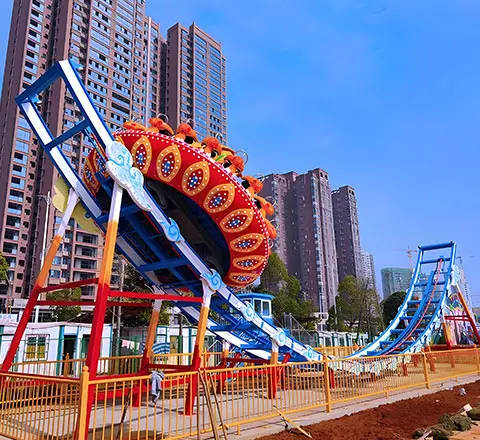
1. Sliding Amusement Rides: Roller Coasters, Mega Disk’O
Roller coasters are one of the classic amusement park rides that offer speed and excitement through fast track operations. Due to their high-speed nature, the safety design of roller coasters is especially critical, including track stability, safety restraint systems, and emergency braking mechanisms.
2. Observation Amusement Rides: Ferris Wheels
Ferris wheels provide a unique experience for visitors to view the surrounding landscape from great heights. Safety measures for Ferris wheels include a powerful braking system and wind protection designs to ensure the ride remains secure in high winds.
3. Rotating Amusement Park Rides: Flying Chairs
Flight tower rides offer a thrilling experience by creating a sense of weightlessness through vertical movement and rotation. Safety considerations focus on seat restraint systems and the control of weightlessness effects.
4. Water Attractions: Water Slides, Wave Pools, River Rapids
Water-based attractions typically involve strong water currents, requiring special attention to the stability of the water equipment, the friction of water slides, and water flow control.
5. Non-Powered Amusement Equipment: Climbing Nets, Jungle Crossings
Non-powered amusement park rides emphasise physical challenges for visitors, typically suited for children and teenagers. Safety designs for these rides focus on the stability of the equipment and adequate protective measures.
6. Other Thrill Rides: Pirate Ships, Self-Driving Aeroplanes, Bumper Cars
These thrilling amusement rides combine mechanical features and interactive experiences, where visitors can experience intense movements such as swinging, rotating, or interacting with other visitors. Safety measures for these rides include securing seats and collision protection.


Safety Inspection Standards
To ensure the safety of amusement rides, all equipment must adhere to strict safety inspection standards. The following are common safety inspection items:
1. Material Safety Requirements
All materials used in amusement rides must meet national standards (Large Amusement Ride Safety Regulations GB 8408-2018), particularly for components that children may come into contact with. Common inspection requirements include:
- Lead content control: The lead content in plastic, metal, and other materials must meet international safety standards.
- Phthalates restriction: All flexible contact parts must comply with phthalate restrictions.
- Formaldehyde emission levels: Artificial wood materials must meet environmental standards for formaldehyde emissions.
2. Structural Integrity Inspection
- For amusement rides taller than 3 meters, structural force calculations must be conducted to verify static strength, fatigue strength, and other key indicators.
- Ensure that the surfaces of the ride are free from sharp edges to prevent injuries.
- Check for potential pinch points between moving parts, ensuring gaps between components meet safety standards to prevent head, neck, or other body parts from being caught.
3. Safety Device Inspection
Ensure that all amusement rides are equipped with necessary safety devices, such as safety belts, armrests, and braking systems. Regular checks should be performed to ensure these devices function properly in emergency situations.
(See more: How to Ensure Safe Operation of Amusement Park Rides: A Comprehensive Guide )


Safety Challenges and Solutions in Amusement Park Equipment Management
Operating amusement park rides involves numerous safety challenges, especially concerning equipment wear, improper maintenance, and operational errors. To address these issues, amusement park operators must adopt effective solutions.
Safety Challenges
- Ageing and Damage to Equipment: With frequent use, equipment can experience wear and tear, especially on high-frequency rides.
- Improper Operation: Operators without sufficient experience or professional training may cause equipment to malfunction, increasing the risk of accidents.
- Inadequate Maintenance: Lack of regular inspections and maintenance may lead to safety hazards and accidents.
Solutions
- Adherence to Safety Standards and Regulations: Ensure that all equipment complies with the local safety regulations and undergoes regular inspections and evaluations.
- Choosing Qualified Equipment Suppliers: Work with reputable equipment manufacturers to ensure the quality and safety of the rides.
- Employee Training and Operational Protocols: Provide ongoing training for operators to enhance their safety skills and establish comprehensive operational guidelines and emergency procedures.
- Regular Maintenance of Amusement Rides: Implement a maintenance schedule to conduct regular checks and repairs, addressing potential safety risks before they become issues.
- Safety Warnings and Signage: Strengthen safety warnings and signage throughout the amusement park to remind visitors of safety precautions.


Safety Precautions When Riding Amusement Rides
To ensure personal safety, visitors should follow these essential safety guidelines before, during, and after riding an amusement attraction:
1. The “Five Don’ts” Before Riding
- Do not ride unverified equipment: Ensure that the amusement ride has a valid inspection certificate.
- Do not ride equipment that appears worn or rusted: The appearance of the ride directly reflects its maintenance condition.
- Do not ride equipment operated by untrained staff: Operators should be professionally trained to handle emergencies.
- Do not ride rides in disorganised waiting areas: Ensure that the waiting environment is orderly to prevent accidents.
- Do not ride equipment at temporary locations: Rides at markets or fairs may lack adequate safety oversight.
2. The “Five Important Points” During the Ride
- Read the passenger instructions carefully: Ask staff if you have any questions or uncertainties.
- Recognise safety signs: If you don’t understand a safety sign, ask staff for clarification.
- If you feel unwell during or after the ride, immediately inform the staff.
- Follow height, age, weight, and health restrictions: People with heart disease, high blood pressure, fear of heights, or those who have been drinking should avoid riding.
3. The “Three Rules” Throughout the Ride
- Follow management guidelines: Listen to the staff during the queue, avoid rushing to get on or off the ride, and do not leave your seat until the ride has safely stopped.
- Follow riding instructions: Keep your seatbelt fastened, maintain proper seating posture, and refrain from unbuckling restraints or leaning out of the ride.
- Follow the park rules: Do not carry flammable or explosive materials, and ensure that children are always supervised by an adult to prevent dangerous behaviours.
Warm Reminder
Always choose legitimate venues, strictly follow the rules, and pay attention to the equipment inspection signs. Avoid accidents caused by improper operation or equipment ageing. While playing is fun, safety should always come first!
Conclusion
The safety of large amusement rides is directly tied to the lives of visitors and the reputation of the amusement park. As a leading amusement ride manufacturer in China, Carnee Rides is committed to providing high-quality, safe, and reliable equipment to help amusement park operators enhance visitor experience while ensuring the long-term safety of the rides. With standardised equipment design, rigorous safety testing, and thoughtful after-sales services, we aim to create a safer and more enjoyable amusement world for our global customers.