When operating a trackless train ride, the most challenging part is not going uphill, but rather going downhill. As the saying goes, “It’s easy to climb, but difficult to descend.” Experienced drivers know that going uphill is relatively easy as long as there’s no overload. However, when going downhill, it is essential to pay attention to several key considerations to ensure safety. So, how should a sightseeing train be operated downhill, and what are the important things to keep in mind? These are questions that many people are concerned about.
With the rapid advancement of technology, most manufacturers of amusement train rides now equip their models with energy recovery systems similar to those found in electric vehicles. These systems make it unnecessary to use downshifting for braking, as the train can slow down by adjusting the energy recovery system. Electric braking is more effective than engine braking when it comes to reducing speed. This effect is particularly noticeable when going downhill for longer distances, as energy recovery can be maximized.
However, some amusement park trackless trains do not have energy recovery systems. For these train rides, it is important to follow proper operating procedures when going downhill. Additionally, some trackless trains may not have a braking system in place, so extra caution is required. Before descending, the driver should ensure that the trackless train has been slowed down appropriately, regardless of the slope. High speeds should never be entered when approaching a slope. It is also crucial to use the “point braking” technique to minimize the heating of the brake pads and extend their lifespan. Regular checks before driving are also essential to ensure the train is in good condition.
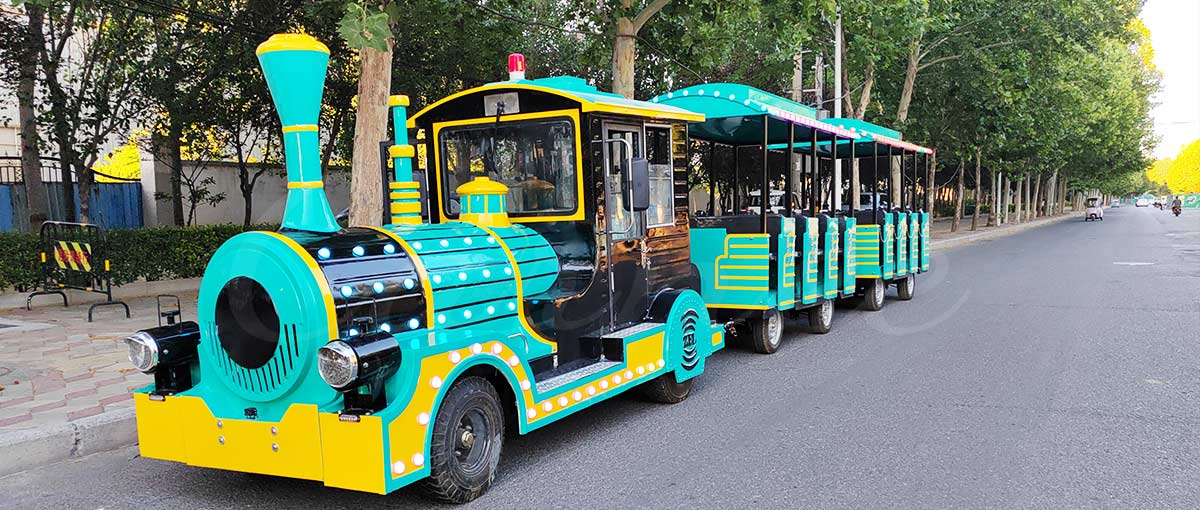
1. Technology Advantages of Modern Sightseeing Trains
With the advancement of technology, many modern electric trackless trains are equipped with energy recovery systems, similar to the technology used in electric vehicles. This means that electric sightseeing trains can slow down by adjusting the energy recovery system instead of relying on downshifting. The effect of electric braking is more significant than engine braking, especially during longer downhill rides, as energy recovery can be more efficient.
However, not all trackless tourist trains come with energy recovery systems. For those without this feature, drivers must follow operating protocols carefully.
2. Preparation Before Going Downhill
Slow Down Before Entering the Slope
Before entering the slope, it is essential to reduce speed. Regardless of the slope’s gradient, never enter a downhill section at high speed. Especially for trackless trains without energy recovery systems, excessive speed can put a significant strain on the braking system, leading to brake failure.
Check the Braking System
Ensure the braking system is functioning properly. For theme park trains without energy recovery, it’s especially important to ensure that the brake pads and the overall braking system are in good condition.
3. Correct Downhill Operation Techniques
Use Point Braking
While going downhill, use the “point braking” technique. This means applying the brakes gently and intermittently to prevent the brake pads from overheating. Continuous or hard braking can lead to brake failure.
Avoid Sudden Steering Movements
When going downhill, avoid sudden steering. Trackless sightseeing trains are relatively long, and sharp turns can cause instability, increasing the risk of tipping over.
Control the Brakes Carefully
Brakes should be applied with caution. Overuse of brakes may cause overheating, which can reduce braking effectiveness. Therefore, use the brakes in intervals to maintain a steady and safe descent.
4. Driving Techniques for Uphill and Downhill
Drive in a Straight Line
Whether going uphill or downhill, always try to drive in a straight line. Avoid stopping or making sharp turns on slopes. This is essential to avoid losing control of the vehicle due to surface irregularities or changes in slope gradient, which could cause the vehicle to tip over.
5. Daily Checks and Maintenance
Before every drive, it’s critical to conduct a comprehensive inspection of the train. The checks should include:
- Braking System: Ensure that the brake pads are not excessively worn, and that brake fluid levels are normal.
- Tires and Batteries: Check the tire pressure and ensure the battery has sufficient charge.
- Structural Integrity: Inspect the trackless train’s structure for any cracks or loose parts.
If any issues are found during the inspection, replace the faulty components immediately to ensure the trackless train is in the best condition, avoiding unnecessary breakdowns or delays.
Conclusion
Operating a trackless sightseeing train downhill requires awareness of safety and professional operation skills. Whether equipped with energy recovery systems or not, following the proper operational guidelines—slowing down before descending, point braking, avoiding sudden steering movements, and regular maintenance checks—will ensure a safe and smooth experience for all passengers.
By ensuring that the train is properly maintained and operated, you can reduce risks and provide passengers with a safe and enjoyable ride.