
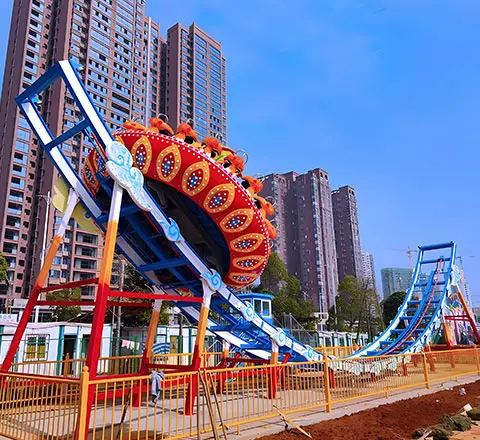


A Comprehensive Theme Park Design Guidelines by Carnee Rides
Theme park master planning is far more than producing an attractive layout or conceptual rendering. It is a strategic, multidisciplinary process that transforms land resources, market demand, and investment objectives into a buildable, operable, safe, and financially sustainable theme park.
For developers, investors, and government agencies searching for an amusement park master plan, the real concern is not inspiration—it is execution.
How do you plan a theme park step by step?
What makes a theme park successful in the long term?
And who is capable of delivering a master plan that works in the real world?
This article provides a comprehensive and practical explanation of the theme park master planning process, based on industry best practices and real project experience.

What Is Theme Park Master Planning?
The master plan for a future theme park is the strategic framework that defines how a theme park is conceived, structured, built, operated, and expanded over time.
A complete theme park master design typically addresses:
- Overall vision, theme, and market positioning
- Land use strategy and functional zoning
- Attraction mix and ride capacity planning
- Guest circulation, queue systems, and crowd management
- Back-of-house logistics and infrastructure
- Safety, compliance, and operational feasibility
- Phasing strategy and long-term expansion planning
Unlike detailed architectural or engineering drawings, the master amusement park plan answers “what, why, and in what order” before answering “how.”
A strong amusement park master plan reduces risk, controls cost, and prevents fundamental mistakes that are extremely expensive to correct later.
What Does a Theme Park Master Planner Do?
A theme park master planner acts as the integrator of creativity, engineering, operations, and investment logic.
The master planner is responsible for coordinating:
- Market analysis and feasibility logic
- Concept development and theme storytelling
- Ride mix planning and capacity calculations
- Park layout and land use optimization
- Infrastructure and utility strategies
- Back-of-house (BOH) efficiency
- Safety standards and lifecycle considerations
- Phased development and future-proof expansion
In practice, the amusement park master planner ensures that guest experience, operational efficiency, and financial performance are aligned from the earliest stages of the project.

How to Plan a Theme Park Step by Step
Step 1: Feasibility Study and Market Definition
Every successful theme park project begins with a feasibility study. This stage defines whether the project makes sense commercially before design investment begins.
Key components include:
- Market size and catchment area analysis
- Demographic and tourism demand assessment
- Competitive benchmarking and positioning
- Attendance forecasting under multiple scenarios
- Preliminary revenue structure (tickets, food, retail, experiences)
The feasibility study establishes the foundation for investor confidence and lender approval. Without it, even the most creative concept remains speculative.
Step 2: Site Selection and Site Analysis
The physical site heavily influences long-term cost, design flexibility, and operational efficiency.
A professional site analysis evaluates:
- Accessibility by road, public transport, and proximity to population centers
- Topography, soil conditions, drainage, and flood risk
- Climate factors such as heat, wind, rainfall, and seasonality
- Availability and cost of utilities (electricity, water, wastewater)
- Zoning regulations, height restrictions, and environmental requirements
Good site planning reduces infrastructure investment and improves guest arrival, orientation, and circulation from day one.
Step 3: Theme Concept and Story Framework
A theme park is defined by its story, not just its rides.
During this phase, planners define:
- The overall narrative and emotional positioning of the park
- Distinct themed zones (typically five to seven for medium and large parks)
- Visual icons and landmarks for wayfinding and branding
- Cultural adaptation or IP integration where relevant
The story framework guides architectural style, landscape design, attraction selection, and guest movement patterns throughout the park.

Step 4: Attraction Mix and Capacity Planning
Attraction planning is one of the most critical elements of theme park master planning.
A balanced attraction mix usually includes:
- Signature “headline” attractions for marketing impact
- Family rides with high repeat visitation
- Children’s attractions influencing family decisions
- Indoor attractions or shows for weather resilience
- High-capacity rides that stabilize queues and crowd flow
Capacity planning ensures that the park can handle peak attendance without excessive waiting times or guest dissatisfaction. It also affects staffing levels, maintenance planning, and long-term operating costs.

Step 5: Theme Park Layout and Guest Flow Design
Once amusement attractions are defined, they must be arranged into a functional and intuitive layout.
Common amusement park layout design models include:
- Loop layouts that promote continuous circulation
- Hub-and-spoke layouts centered on a visual icon
- Hybrid layouts adapted to irregular sites
Key layout principles include:
- Placing major attractions deeper in the park to distribute guest flow
- Positioning food and retail near natural dwell points
- Designing wide, readable circulation routes
- Integrating shaded and interactive queue areas
Effective guest flow design directly improves guest satisfaction and operational efficiency.
Step 6: Back-of-House and Infrastructure Planning
Back-of-house systems are rarely visible to guests but are essential for long-term success.
Theme Park Master planning must define:
- Service roads and delivery access
- Waste management and recycling routes
- Maintenance workshops and spare parts storage
- Staff facilities, security control, and medical stations
- Central kitchens or shared support facilities, where applicable
Neglecting back-of-house planning often results in higher labor costs, operational inefficiencies, and future retrofitting expenses.
Step 7: Sustainability and Utility Strategy
Modern theme parks must integrate sustainability and resilience at the master planning stage.
Considerations include:
- Power load planning with future expansion capacity
- Water supply, wastewater treatment, and stormwater management
- Heat mitigation through shading, vegetation, and material choices
- Renewable energy feasibility depends on site conditions
- Environmental compliance and community integration
Sustainability is not only an environmental responsibility but also a long-term cost-control strategy.

Step 8: Phasing and Long-Term Expansion Planning
Few theme parks are built all at once. Phased development is the norm.
A strong master plan ensures that:
- Phase 1 delivers a complete and attractive guest experience
- Infrastructure is sized to support future phases
- Expansion zones are protected and logically connected
- The original story and guest circulation remain intact
Phasing allows capital investment to grow alongside market demand and revenue.
Step 9: Pre-Opening and Operational Readiness
Successful theme parks plan for opening from the very beginning.
This includes:
- Soft opening and testing strategies
- Ride commissioning and staff training programs
- Maintenance planning and spare parts strategies
- Safety drills, crowd management, and emergency procedures
Operational readiness protects brand reputation and ensures a smooth opening period.

Theme Park Master Plan Deliverables
A professional theme park master planner should provide more than visuals.
Typical deliverables include:
- Vision and market positioning summary
- Land use and functional zoning plans
- Attraction mix and capacity logic
- Guest circulation and queue strategy
- Back-of-house and logistics planning
- Utility and infrastructure concepts
- Phasing and expansion roadmap
- High-level cost structure framework
- Risk assessment and mitigation strategy
These deliverables guide all subsequent design, engineering, and construction stages.
Who Can Provide Theme Park Master Planning and Design Services?
Traditionally, theme park master planning was associated mainly with consulting firms or architectural studios. Today, many experienced amusement and theme park equipment manufacturers also provide master planning and design services.
This is because rides and attractions determine:
- Land requirements and foundation design
- Structural loads and utility demand
- Capacity, queue length, and guest distribution
- Maintenance access and operational constraints
Example: Carnee Rides
Carnee Rides, a professional amusement ride manufacturer from China, provides integrated theme park master planning and design services alongside ride manufacturing.
With more than 20 years of industry experience, products supplied to 120+ countries, and over 3,000 successful projects, Carnee Rides’ planning capability is based on real engineering, installation, and operational knowledge.
Their services typically include:
- Theme park design service
- Attraction mix and capacity strategy
- Manufacturing of rides such as Ferris wheels, pirate ships, pendulum rides, self-controlled airplanes, flying towers, rotating towers, disco rides, and other large and small amusement equipment.
- Installation, commissioning, and after-sales support
This integrated approach ensures that master plans are buildable, cost-controlled, and operationally realistic, rather than purely conceptual.
(See more: Top 10 Amusement Park Design Companies )

What Makes a Theme Park Successful?
A successful theme park consistently balances creativity with discipline.
Key success factors include:
- Clear target market and positioning
- A balanced and scalable attraction mix
- Logical layout and efficient guest flow
- Strong operations and maintenance planning
- Financial discipline and phased growth
- Consistent storytelling and immersive environments
Successful parks are planned, not improvised.
Conclusion
Theme park master planning is the foundation of every successful theme park project. It ensures that decisions made at the beginning support safe construction, efficient operation, and long-term growth.
Whether working with a specialized consultancy or an integrated provider such as Carnee Rides, a comprehensive master plan is the most important investment you can make before building a theme park.


