
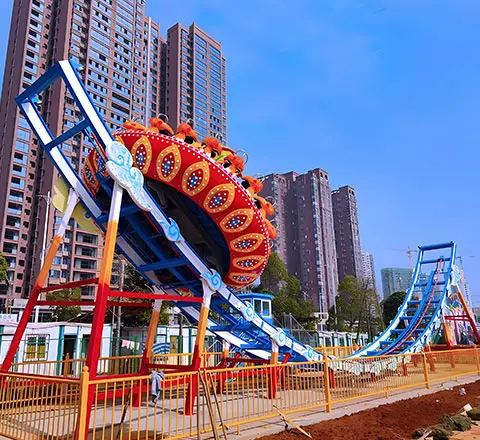


When comparing new vs used pirate ship rides, many amusement park investors first notice the lower selling price of second-hand equipment. A used ride may have fresh paint, new lighting and an attractive boat body, while the seller describes it as refurbished and ready to operate.
However, a pirate ship is not ordinary second-hand machinery. It is a passenger-carrying thrill ride that repeatedly accelerates, decelerates and changes direction. Its safe and stable operation depends on the condition of the support frame, crossbeam, swing arms, shafts, bearings, braking system, control system, restraints and foundation connections.
For most long-term commercial projects, Carnee Rides recommends purchasing a new pirate ship ride rather than a used one. We do not sell or broker second-hand amusement equipment because the actual operating history, structural condition, remaining service life, technical records and after-sales support of a used ride can be difficult to verify.
This does not mean that every used pirate ship ride is automatically unsafe. A unit with a confirmed identity, complete records, qualified inspection and reliable original-manufacturer support may still be evaluated. The real question is whether the lower purchase price represents genuine value or simply transfers unknown risks to the new owner.
International amusement-ride standards treat design, manufacture, installation, operation, maintenance and inspection as connected parts of the equipment lifecycle. ISO 17842-1:2023 covers the safe design, calculation, manufacture and installation of amusement rides, while the ASTM F24 standards referenced by IAAPA address areas including manufacturing, testing, operation, maintenance, inspection and quality assurance.
Quick answer: A new pirate ship ride is usually the safer and more predictable choice for a commercial park. A used unit should be considered only after its identity, technical condition, documents, refurbishment work and suitability for the new site have been independently verified.

1. New vs Used Pirate Ship Rides: Quick Comparison
The decision is not simply that new equipment costs more and used equipment costs less. The more important difference is how much control the buyer has over the ride’s condition, configuration, installation and future support.
| Comparison | New Pirate Ship Ride | Used Pirate Ship Ride |
| Initial purchase price | Higher | Usually lower |
| Equipment history | Clear from production | Must be verified |
| Structural condition | Newly manufactured | Depends on previous use and repairs |
| Remaining service life | Easier to plan | Difficult to estimate without records |
| Safety and control systems | New and model-matched | May be worn, modified or outdated |
| Technical documents | Supplied with the equipment | May be incomplete or missing |
| Customization | Capacity, theme, color and voltage can be selected | Usually limited |
| Site adaptation | Planned for the new project | Requires a new compatibility review |
| Warranty | Defined in the purchase contract | Often limited or unavailable |
| Spare parts | Easier to identify and supply | Model and manufacturer dependent |
| Installation support | Available from the manufacturer | Seller may not understand the original design |
| Long-term cost | More predictable | May rise after inspection and repair |
A second-hand pirate ship ride may appear less expensive on the first quotation. It must still be dismantled, transported, reinstalled, tested, approved, maintained and kept operational. Those later stages often determine whether the purchase actually saves money.
Buyers who are still comparing capacities, dimensions and configurations can read our Pirate Ship Ride Buying Guide before choosing between new and used equipment. The guide explains how venue type, visitor group, swing angle, structure, material and installation conditions affect model selection.

2. 9 Hidden Risks of Buying a Used Pirate Ship Amusement Ride
1. The Actual Operating History May Be Unknown
The year shown on the nameplate does not reveal how intensively the ride has been operated.
Two pirate ships produced in the same year may be in completely different condition. One may have worked only during weekends or seasonal events. Another may have operated for long hours every day, frequently at full capacity and in a humid or corrosive outdoor environment.
Before assessing a used pirate ship ride for sale, the buyer should try to establish:
- Where the ride was previously installed
- How many years it operated
- Whether it worked seasonally or throughout the year
- Its approximate daily operating frequency
- Whether it was exposed to salt, moisture or extreme weather
- How many times it was dismantled and relocated
- Which major components were repaired or replaced
- Whether abnormal faults or accidents occurred
A seller may know when the equipment was manufactured but have little information about the actual number of operating cycles, previous overloading, maintenance quality or storage conditions.
Without a reliable history, buyers cannot clearly distinguish lightly used equipment from a ride that has already experienced years of demanding commercial operation.
2. A Refurbished Appearance Does Not Prove Technical Condition
A refurbished pirate ship ride can look almost new in sales photos.
Common appearance work includes:
- Repainting the steel structure
- Adding new graphics and decals
- Repairing the fiberglass surface
- Installing new LED lighting
- Replacing seat covers
- Cleaning visible components
These changes may improve the ride’s appearance without addressing the parts that carry loads, control movement or protect passengers.
Cosmetic Refurbishment vs. Technical Refurbishment
| Cosmetic refurbishment | Technical refurbishment |
| New paint | Structural condition assessment |
| New decals | Inspection of welds and load-bearing members |
| Fiberglass surface repair | Examination of shafts, pins and bearings |
| New lighting | Brake inspection or replacement |
| Seat-cover replacement | Electrical and control-system upgrading |
| General cleaning | Testing of restraints and safety devices |
The term “fully refurbished” has little technical value unless the seller provides a written scope of work.
That document should explain:
- Which parts were inspected
- Which parts were repaired
- Which parts were replaced
- Who completed the work
- Which testing methods were used
- Whether the work was reviewed by a qualified organization
Fresh paint cannot confirm the condition of internal welds, bearings, shafts, braking components or electrical controls.
3. Structural Fatigue and Previous Repairs May Be Hidden
A pirate ship repeatedly changes direction during operation. Its major structures and connections are therefore exposed to repeated dynamic loads rather than one permanent static load.
Important areas may include:
- Main support frame
- Crossbeam
- Swing arms
- Internal boat-supporting structure
- Main shafts and pins
- Bearing positions
- Welded joints
- Drive connections
- Braking connections
- Base and anchor connections
Surface coatings can conceal corrosion, historical welding, reinforcement or repairs carried out by unknown parties.

A ride may also have been modified during previous maintenance. Non-original components, altered connections or undocumented reinforcement can make future inspection and troubleshooting more difficult.
Photographs and a short trial run cannot replace a professional pirate ship ride inspection. Qualified amusement-ride, mechanical and structural personnel should determine which visual checks, measurements and testing methods are appropriate for the specific model.
4. Safety and Control Systems May Be Outdated
A used Viking ship ride may contain components that are worn, discontinued or unsuitable for its new location.
Possible concerns include:
- Aging control cabinets
- Discontinued controllers
- Modified electrical wiring
- Worn sensors
- Old limit switches
- Brake components with unclear service history
- Altered emergency-stop circuits
- Outdated passenger restraints
- Non-original electrical components
- Changes to the operating program without records
The equipment may have operated at its previous park, but that does not prove it will function correctly after dismantling, international transport and reinstallation.
The new location may also have different voltage, frequency, environmental conditions, inspection requirements or operator procedures. Electrical adaptation is not simply a matter of changing a plug or replacing one motor.
5. Missing Technical Documents Can Stop the Project
Amusement ride technical documents are not optional paperwork. They are needed to identify the equipment, design the foundation, assemble the structure, trace components, troubleshoot faults, plan maintenance and apply for local inspection.
A used pirate ship should have verifiable records such as:
- Original manufacturer
- Model and serial number
- Manufacturing date
- Equipment nameplate
- General arrangement drawing
- Structural drawings
- Electrical diagrams
- Foundation information
- Operating manual
- Maintenance manual
- Parts list
- Inspection reports
- Repair records
- Modification records
- Previous fault or accident records
If the nameplate, drawing and seller’s description do not match, the buyer may not know which technical information actually belongs to the equipment.
Incomplete documents can lead to practical problems:
- The foundation cannot be accurately prepared
- Components cannot be correctly identified
- Wiring changes are difficult to trace
- Spare parts cannot be matched
- Installation instructions are unclear
- Inspectors may request information the buyer cannot provide
Local requirements differ between countries and regions. In China, TSG 71—2023 has applied since March 1, 2024 and covers the production, use, inspection, testing and supervision of large amusement rides. For U.S. projects, the applicable state or local authority should be consulted before a used ride is purchased or imported.
Documents should therefore be reviewed before payment and shipment, not after the equipment reaches the destination.
6. A Pirate Ship Ride’s Lifespan Cannot Be Judged by Age Alone
The production year is only one factor in a pirate ship ride’s lifespan.
Remaining condition also depends on:
- Original engineering and manufacturing quality
- Number of operating cycles
- Passenger loading
- Outdoor exposure
- Corrosion protection
- Lubrication and maintenance
- Inspection history
- Previous repairs
- Number of relocations
- Condition of load-bearing components
A ten-year-old ride that was carefully maintained and lightly used may be in better condition than a newer unit that operated intensively in a harsh environment.
For that reason, statements such as “it worked before dismantling” or “it still swings normally” do not provide enough information. The buyer needs to know whether the equipment can remain reliable after another transport, installation and inspection cycle.
7. Original Warranty and After-Sales Support May Be Unavailable
Used amusement rides are often sold by:
- Previous park operators
- Equipment brokers
- Asset disposal companies
- Refurbishment businesses
- General machinery resellers
These sellers may be able to arrange a transaction but may not understand the original engineering design.
They may be unable to provide:
- Model-specific installation instructions
- Original foundation-load information
- Electrical troubleshooting
- Control-program assistance
- Updated drawings
- Correct replacement parts
- Commissioning support
- Manufacturer warranty
Even when the original manufacturer still exists, the first buyer’s warranty may not transfer to a second owner.
Before purchasing, the buyer should ask one practical question:
If the ride cannot operate after installation, who will diagnose the problem and remain responsible for solving it?
A vague promise to “help remotely” is not the same as a clear technical-support arrangement.
8. Replacement Parts May Be Difficult to Identify
Older or modified equipment may use components that are no longer manufactured.
The buyer may later discover that:
- The original model has been discontinued
- The component name or specification is unknown
- The existing controller is obsolete
- A sensor has no direct replacement
- A custom shaft, pin or bracket must be produced
- An alternative motor requires further modification
- The correct electrical drawing is unavailable
- Delivery takes longer than the operating season allows
Pirate ship ride spare parts are not all universal. A component that looks similar may have different dimensions, load capacity, electrical ratings or installation requirements.
The financial effect includes more than the price of the replacement part. The park may also lose revenue while waiting for identification, production, delivery, installation and retesting.
9. Relocation Creates a New Engineering Project
A second-hand pirate ship cannot simply be removed from one venue and placed at another.
Relocation may involve:
- Dismantling at the original site
- Marking and recording components
- Checking for missing parts
- Packing and loading
- Transport or international shipping
- Inspection after dismantling
- New site assessment
- New foundation design
- Electrical adaptation
- Reinstallation and alignment
- Testing and commissioning
- Local inspection and registration
The original foundation was designed for another location. The new site may have different soil conditions, available space, wind exposure, climate, voltage and approval requirements.
Damage can also occur during poor dismantling, loading or transport. A ride that operated before shipment may fail after arrival because of disconnected wiring, damaged sensors, incorrect assembly, misalignment, missing parts or an unresolved pre-existing fault.
That is why relocation should be evaluated as a complete technical project, not only as a freight arrangement.
3. A Real U.S. Customer Case: A Used 24-Seat Pirate Ship That Never Opened
One of our U.S. customers previously purchased a low-priced second-hand 24-seat pirate ship from another seller.
The quotation looked attractive, and the customer expected the equipment to become a new operating attraction without the cost of purchasing a factory-new ride.
The equipment was transported to the United States and installed at the customer’s park. After installation, however, the ride could not operate.
The customer contacted the seller for assistance. The seller suggested that the motor might be the problem, but could not confirm the real cause or provide a structured diagnostic process.
The customer then spent additional time checking the equipment and trying to resolve the fault. The ride occupied the prepared site but could not carry passengers. Purchase, shipping and installation expenses had already been paid, while the unavailable attraction affected the park’s business plan.
After repeated attempts, the ride still did not operate. The customer eventually accepted the loss and contacted Carnee Rides to order a new pirate ship.
This experience reveals a risk that is not visible on the original quotation:
The most expensive used ride may be the one that arrives, is installed and never starts earning revenue.
The problem was not simply whether the motor had failed. The larger problem was that the seller could not accurately diagnose the equipment, identify the real fault or provide an effective after-sales solution.
A replacement motor would not have solved the problem if the actual cause involved the control system, wiring, sensors, braking logic, power configuration, incorrect installation or several issues together.
4. Is a Used Pirate Ship Ride Really Cheaper?
The right way to compare new vs used pirate ship rides is to examine the complete installed and operating cost, not only the purchase price.

| Cost item | Used ride | New ride |
| Equipment purchase | Required | Required |
| Dismantling at the previous site | Usually required | Not required |
| Parts inventory and packing | Often required | Prepared for factory shipment |
| Transport | Required | Required |
| Technical inspection | Strongly recommended | Factory and project inspections still apply |
| Refurbishment | May be required | Normally unnecessary at delivery |
| Missing or damaged components | Possible | Less likely |
| Electrical modification | May be required | Configured for the order |
| New foundation | Required | Required |
| Installation and commissioning | Required | Required |
| Warranty and manufacturer support | Uncertain | Defined by contract |
The visible costs are equipment, freight and installation. Less visible costs can include repeated diagnostics, custom parts, extra technician travel, delayed inspection and lost operating time.
A used unit that is inexpensive to purchase but unreliable after delivery may have a higher cost per usable operating year than a new ride.
Ask for Evidence, Not General Promises
Before buying, request evidence that can be checked:
- Clear photographs of the nameplate
- Manufacturer, model and serial number
- Complete equipment inventory
- Original and current electrical diagrams
- Maintenance and inspection history
- Written refurbishment report
- List of replaced components
- Test records
- Recent operating video showing the complete ride
- Confirmation of available spare parts
- Written installation and commissioning responsibilities
The seller should also explain whether the ride is being sold:
- As-is
- Repainted
- Mechanically repaired
- Electrically upgraded
- Fully rebuilt and retested
These descriptions are not interchangeable.
Include Inspection and Performance Terms in the Purchase Process
Buyers may consider requesting:
- The right to arrange an independent inspection
- Access to relevant technical records
- A witnessed operating test before dismantling
- A written list of missing or damaged parts
- A documented refurbishment scope
- Clear responsibility for loading damage
- Confirmation of installation support
- A defined response if the ride fails commissioning
Contract wording should be reviewed under the laws and requirements applicable to the project.
Stop the Purchase When Essential Information Is Missing
Major warning signs include:
- Missing or damaged nameplate
- Unverifiable serial number
- Unknown original manufacturer
- No structural or electrical drawings
- No maintenance history
- Refusal of independent inspection
- Unexplained welding or reinforcement
- Unknown replacement components
- No clear spare-parts source
- Full payment required before technical review
A low price cannot compensate for equipment that cannot be identified, installed or supported.
5. Why a New Pirate Ship Ride Is Usually the Better Business Decision
A new ride still requires correct installation, inspection, operation and maintenance. Its advantage is that the project starts with a known technical condition and a clear line of responsibility.

It Can Be Matched to the Actual Venue
A new commercial pirate ship ride can be selected according to:
- Available site dimensions
- Indoor or outdoor use
- Target visitor age
- Required passenger capacity
- Desired thrill level
- Local voltage and frequency
- Foundation conditions
- Park theme and appearance
- Transport limitations
- Expected opening schedule
Carnee Rides currently offers mini 8–12-seat models, medium 24-seat rides and large 36–40-seat configurations, including mobile and foundation-free options.
Instead of adapting an unknown used unit to the project, the buyer can select an appropriate model from the beginning.
The Technical Baseline Is Clear
With new equipment, the buyer can identify:

- The manufacturer
- Production date
- Model and configuration
- Applied drawings
- Electrical system
- Installed components
- Operation requirements
- Maintenance requirements
- Spare-parts specifications
This makes installation, troubleshooting and future maintenance more manageable.
Appearance and Configuration Can Be Customized
A new ride can be designed around the park rather than the previous owner’s preferences.

Possible options include:
- Pirate, Viking or ocean themes
- Park colors and branding
- Custom logos
- FRP decorative shapes
- Lighting and sound
- Seat capacity
- Voltage configuration
- Family-oriented or stronger-thrill models
Carnee Rides’ current product collection includes mini, 16-seat, 24-seat, 36-seat and 40-seat pirate ship models for different venue types. Buyers can compare them on our Pirate Ship Rides for Sale page.
Support Continues Beyond Manufacturing
As a Chinese premium amusement ride manufacturer with more than 20 years of industry experience, Carnee Rides provides project-based support throughout the purchasing and delivery process. Depending on the selected equipment and sales contract, our services may include model selection, site layout communication, custom design, technical drawings, production updates, factory inspection, packing and shipping preparation, installation materials, remote technical guidance, optional on-site engineer support, commissioning assistance and long-term spare-parts support.
This support is particularly important for first-time investors who may not have their own engineering, installation and maintenance teams.

New vs Used Pirate Ship Rides FAQ
For wider questions about pirate ship names, working principles, models, safety, installation and maintenance, see our Pirate Ship Amusement Ride Ultimate FAQ Guide.

Get a Reliable Pirate Ship Solution from Carnee Rides
Carnee Rides can recommend a suitable new pirate ship based on your venue, target visitors, capacity, voltage, theme and investment plan.
Our team can provide model selection, custom appearance design, technical information, shipping preparation, installation guidance and ongoing spare-parts communication.
For a project proposal, send us:
- Project country and city
- Indoor or outdoor use
- Available site dimensions
- Preferred passenger capacity
- Local voltage and frequency
- Reference design or preferred theme
- Destination port
- Expected opening date
We will help you select a practical model and prepare a clearer equipment configuration and factory quotation.
“Further Reading: Expanding your attraction lineup? Before acquiring your next Ferris wheel or carousel, make sure to read our ultimate new vs. used amusement rides investment guide to make bulletproof, data-driven purchasing decisions for your entire park.”


