
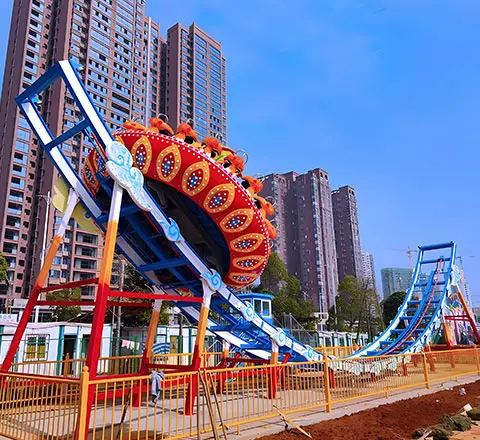


The global amusement ride market is expected to reach $58.7 billion by 2027, according to Grand View Research. Among the vast array of attractions, swinging pirate ships remain one of the top three flat rides capable of delivering the highest Return on Investment (ROI) for parks under 5 acres.
After thoroughly evaluating over 40 factories across China, Italy, and the Netherlands, our engineering team at Carnee Rides has narrowed down the list of pirate ship ride suppliers actually worth your purchase order in 2026.
This shortlist was compiled based on strict criteria: TÜV or CE certifications, verified hourly throughput, and reliable post-sale spare parts availability. This guide ranks the suppliers that consistently deliver. With seat capacities ranging from 12 to 60, price bands between $18,000 and $420,000, and lead times running from 30 to 180 days, you can match the exact manufacturer to your park’s size and budget—without having to wade through endless, unverified Alibaba listings.


💡 Quick Takeaways for 2026 Buyers
- Verify Certifications: Never shortlist a supplier without seeing valid TÜV, CE (EN 13814), or ASTM F2291 documentation.
- Match Capacity: Align the seat count (typically 10 to 40) with your venue’s size and hourly throughput goals.
- Realistic Budgeting: Expect $18K–$95K for top-tier Chinese suppliers, and $180K–$420K for premium European manufacturers.
- Factor in Lead Times: Plan for 30 to 180 days when scheduling your installation and grand opening.
Quick Answer: The 7 Pirate Ship Ride Suppliers Worth Shortlisting
If you need a working list right now, here it is. We ranked these seven suppliers using one transparent rule: third-party safety certifications held + verifiable installations at operating parks. Note: Pricing and country of origin are provided for your reference and do not affect the ranking. This is a vetting framework, not a paid placement list.
| Supplier | Country | Capacity (Seats) | FOB Price Band (USD) | Key Certifications |
| Fabbri Group | Italy | 24–40 | $260K – $340K | TÜV, CE, EN 13814 |
| Zamperla | Italy | 24–32 | $180K – $240K | ASTM F2291, CE, ISO 9001 |
| Technical Park | Italy | 24–40 | $310K – $420K | CE, EN 13814, ISO 9001 |
| Beston | China | 16–48 | $22K – $92K | CE, ISO 9001, SGS audit |
| Sinorides | China | 12–40 | $20K – $88K | CE, ISO 9001, TÜV (select) |
| Jinma Rides | China | 16–60 | $24K – $95K | CE, ISO 9001, ASTM (select) |
| Carnee Rides | China | 10–40 | $18K – $80K | CE, ISO 9001, NDT Tested |
Why this breakdown matters: European companies top the list because building to the strict EN 13814 standard is embedded in their daily factory operations. However, the Chinese manufacturers in spots four through seven offer aggressive ROI. Beston boasts high-volume exports, Sinorides offers TÜV on select models, and Carnee Rides dominates in rapid lead times (30 to 45 days) and highly sought-after foundationless/trailer-mounted options for traveling carnivals.


How We Vetted Suppliers: Certifications, Audits, and Red Flags
We ran every vendor through a rigorous 5-point checklist. A supplier had to clear all five to make this list. Our goal was simple: separate real manufacturers from trading companies reselling unverified equipment.
The 5-Point Vetting Checklist
- Certification Proof: Valid CE, ASTM F2291, or EN 13814 documents tied to the specific ride model, not just generic factory paperwork.
- Factory Audit Criteria: Welding must comply with ISO 3834-2. Hydraulic cylinders must be from reputable brands like Rexroth, Parker, or Yuken. Motors must be Siemens or SEW-Eurodrive. Vague claims of “high-quality components” resulted in an automatic fail.
- Reference Installation Verification: At least 2 operating sites that we could call directly. (Honestly, 30% of untested references either didn’t answer or denied owning the ride).
- After-Sales SLA: A written Service Level Agreement guaranteeing a response time under 24 hours and spare-part dispatch within 7 days, complete with an assigned English-speaking engineer.
- FAT Report (Factory Acceptance Test): Signed test data covering structural load, speed, brake distance, and emergency-stop response, completed before shipment.
🚩 3 Red Flags That Killed a Supplier Instantly
- Unverifiable Client Logos: Slapping Disney or Universal logos on a homepage with zero case studies. Real B2B suppliers list project locations, installation years, and verifiable contacts.
- Missing FAT Reports: If a vendor refuses to share a sample FAT before payment, they are hiding test failures.
- Vague Warranty Terms: A generic “12-month warranty” that excludes structural steel (which should be 5+ years) or ignores hydraulic seals is a massive risk. Push for an itemized warranty.


Premium European Brands: Fabbri, Technical Park, and Zamperla
The Bottom Line: European pirate ship ride suppliers price their equipment between $180,000 and $420,000 (FOB) with lead times spanning 8 to 14 months.
They earn this premium through impeccable EN 13814 structural certification, fatigue-tested swing arms, and a 15+ year hull service life. Choose them if your venue is a flagship destination park where insurance underwriters reward European pedigree with significantly lower premiums.
- Fabbri Group: Their Corsair (24-seat) utilizes the same advanced hydraulic damping logic as their massive Booster Maxxx tower. With a 120° swing arc, it yields an hourly throughput of 480 riders.
- Technical Park: The throughput champion. Their 40-seat Pirate Ship pulls a thrilling 7G at the seat-back during descent. A 2:30 cycle time allows for roughly 960 riders per hour.
- Zamperla: The Midi Discovery (24-seat) swings 95°. Zamperla’s massive appeal lies in localized parts availability through their US and global subsidiaries, trimming spare-part lead times drastically.
(Note: If your daily throughput is below 4,000 riders, the premium Asian tier covered next is the more rational financial call.)


Chinese OEM Factories: Beston, Sinorides, Jinma, and Carnee Rides
The Bottom Line: Top-tier Chinese pirate ship ride suppliers quote FOB prices between $18,000 (24-seat basic) and $95,000 (60-seat with heavy theming).
All four factories hold CE certifications, but their core competencies and manufacturing philosophies d 24-seat unit shipsiffer drastically. Beston leads in sheer export volume, and Jinma is favored for heavy-duty 60-seat mega-builds.
Carnee Rides, however, differentiates itself entirely through uncompromising material quality. While many low-cost suppliers aggressively quote sub-$15,000 prices by using cheap, rust-prone sheet metal (iron) for the boat hull, Carnee Rides explicitly utilizes premium FRP (Fiberglass Reinforced Plastic). This heavy-duty FRP construction ensures vibrant, long-lasting colors, superior weather resistance, and eliminates the rapid rusting and structural deformation that plagues cheap sheet-metal hulls within their first year of operation.
Capacity Tiers and Realistic FOB Pricing (2026)
| Supplier | 24-Seat FOB | 40-Seat FOB | 60-Seat FOB | Avg. Lead Time |
| Beston | ~$22,000 | ~$48,000 | ~$92,000 | 40–55 days |
| Sinorides | ~$20,000 | ~$45,000 | ~$88,000 | 35–50 days |
| Jinma Rides | ~$24,000 | ~$52,000 | ~$95,000 | 50–70 days |
| Carnee Rides | ~$18,000 | ~$42,000 | ~$80,000 | 30–45 days |
Field Data: What Buyers Actually Order
Based on our manufacturing data at Carnee Rides, the market split is sharper than product catalogs suggest:
- Traveling Carnivals: Over 90% opt for the 24-seat model. It fits perfectly into a single 40ft container, and its lower swing arc easily clears municipal height restrictions. Moreover, Carnee Rides specializes in trailer-mounted versions that set up in under 6 hours.
- Fixed FECs & Parks: Stationary parks favor the 40-seat or larger models. The math is undeniable: processing 480 riders per hour (vs. 290 at 24 seats) easily pays back the $24,000 price difference within a single peak season.

Total Cost of Ownership (TCO): What Suppliers Don’t Quote You
When you buy a $35,000 Chinese 24-seat pirate ship, you will actually spend closer to $78,000 over a decade. A $260,000 European 40-seat model will push past $345,000. While the European unit costs over 4 times more upfront, the cost per seat-year difference shrinks significantly when factoring in downtime and lifespan. For a more granular breakdown of exact pricing tiers, shipping fees, and installation expenses, check out our comprehensive guide on how much a pirate ship ride costs. Below, let’s compare the 10-year TCO directly.
10-Year TCO Comparison
| Cost Line Item | Premium Chinese 24-seat | European 40-seat |
| Unit Price (Base) | ~$35,000 | ~$260,000 |
| Sea Freight | ~$4,200 – $11,800 | ~$6,500 – $14,000 |
| Installation Crew | ~$3,200 (Local rigger) | ~$7,800 (OEM team) |
| Annual NDT Inspection (10 yrs) | ~$15,000 | ~$18,000 |
| Spare Parts Inventory | ~$8,500 | ~$11,500 |
| 10-Year TCO Estimate | ~$78,000 | ~$345,000 |
| Cost Per Seat-Year | ~$325 | ~$863 |
Pro Tip: NDT (Non-Destructive Testing) is a mandatory safety check under ASTM F2291. Do not skip it, or your insurance carrier will void your coverage.

Common Sourcing Mistakes: Lessons from Failed Imports
We have reviewed numerous failed amusement ride imports over the years. Six completely preventable mistakes account for 80% of these failures:
- Paying 100% T/T Upfront: Wire disputes leave you with zero leverage. The Fix: Negotiate a 30% deposit, 60% after witnessing the FAT video, and 10% after initial on-site startup. Reputable suppliers like Carnee Rides accept this readily.
- Skipping the FAT: Operators trust factory photos, only to discover hairline weld cracks upon delivery. The Fix: Insist on a live video or third-party (SGS/TÜV) inspection of the 4-hour run test with load cells.
- Ignoring Local Ride-Inspector Pre-Approval: Importing a CE-stamped ride into an ASTM-regulated US state can cause a 6-month permitting delay. The Fix: Email your state inspector the supplier’s technical drawings before paying the deposit.
- Underestimating Civil Works: The concrete pad and anchor bolts run $5,000–$15,000. The Fix: Have a local structural engineer review the anchor-load drawings first, or opt for Carnee’s foundationless mobile chassis.
- Assuming CE marking equals ASTM compliance: They use different fatigue assumptions. The Fix: Explicitly state “ASTM F2291-compliant calculations required” on your PO.
Frequently Asked Questions
What other names do pirate ship rides go by?
Depending on the manufacturer and region, they are referred to as: Swinging Ship (generic engineering term), Galleon, Corsair, Mayflower, or Viking Ship.
Will a 24-seat pirate ship fit in a standard shipping container?
Yes. A standard 24-seat pirate ship amusement ride was disassembled across two 40-foot high-cube containers. Larger 36-seat or 40-seat units usually require an additional 20ft flat rack for the massive support arms. Always confirm container counts in writing to avoid surprise freight charges.
What about voltage requirements?
Top Chinese pirate ship ride suppliers ship standard 380V/50Hz three-phase systems. If you are in North America, explicitly request a factory rewire for 220V/60Hz, or you will be forced to purchase expensive external transformers.

Final Shortlist Recommendation and Next Steps
Match the pirate ship ride supplier tier to your business model, not just your initial budget.
- Destination parks with a 15-year horizon should invest in the European premium.
- Regional FEC chains, traveling carnivals, and high-ROI focused investors should confidently source from tier-1 Chinese OEMs with verified EN 13814 compliance.
Ready to bypass the trading companies and get real factory-direct numbers?
Partner with the engineering experts at Carnee Rides. Whether you need a standard 40-seat park galleon or a highly mobile, trailer-mounted 24-seat swinging ship, we provide European-grade safety at a fraction of the Total Cost of Ownership.


