
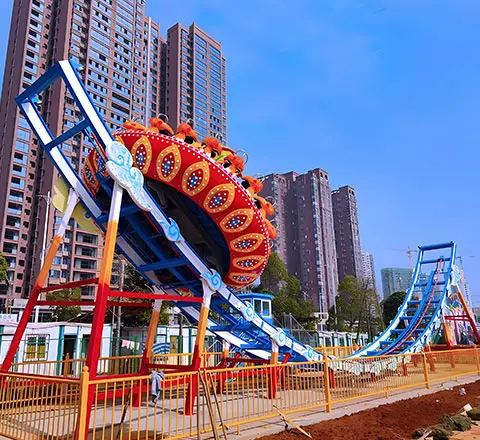


Discover the real cost to build a small amusement park in 2026, with budgets ranging from $100,000 to over $2 million. This comprehensive guide by Carnee Rides breaks down the essential expenses—from land and infrastructure to the 40% typically spent on rides. We also expose the hidden logistical costs often overlooked by new investors and share factory-direct strategies to help you maximise profitability and achieve an ROI within 18 months.
Building a theme park doesn’t always require a “Disney-sized” budget. In fact, the most agile and profitable segment in the global amusement industry today is the Small Amusement Park (often referred to as a Pocket Park, FEC, or Community Adventure Zone).
For investors and entrepreneurs, the burning question isn’t “how much for a mega-park,” but rather: What can I realistically build with a budget between $100,000 and $2 million?
As a professional one-stop amusement park solution manufacturer with over 20 years of experience worldwide, Carnee Rides is here to break down the real costs, the hidden fees no one tells you about, and the profit potential of building a small amusement park in 2026.
Defining the Scope: What Can Your Budget Actually Build?
Before you sign a lease or buy land, you must define the scale. In the manufacturing world, we categorise “Small Parks” into three distinct investment tiers. Identifying which tier you belong to is the first step in cost control.
(Note: If you are actually planning a large-scale destination project with a budget exceeding $10 million, please refer to our comprehensive parent guide: How Much Does It Cost to Build an Amusement Park? Complete Breakdown (2026).)

1. The Micro Park / Indoor FEC (Budget: $100,000 – $300,000)
- Typical Size: 500 – 1,500 sqm (often inside shopping malls or repurposed warehouses).
- Equipment Focus: High-density, low-maintenance rides.
- Typical Mix: A 12-16-seat Merry-Go-Round, a soft play area (Naughty Castle), bumper cars, and arcade machines.
- Goal: High frequency, short-stay visits for local families.


2. The Community Outdoor Park (Budget: $350,000 – $800,000)
- Typical Size: 2,000 – 5,000 sqm.
- Equipment Focus: A mix of mechanical family rides and non-powered playground structures.
- Typical Mix: Includes 1 “Anchor Ride” (like a Flying Chair Ride or Mini Ferris Wheel) plus 5-8 supporting rides like Trackless Trains, Self-Control Planes, and a Kiddie Roller Coaster.
- Goal: Weekend destination for the local community.


3. The Boutique Tourist Park (Budget: $1 Million – $3 Million)
- Typical Size: 10,000 sqm+ (often near beaches or tourist spots).
- Equipment Focus: Visual landmarks and higher capacity thrill rides.
- Typical Mix: A 30m+ Ferris Wheel, a Pirate Ship Amusement Ride, a Sky Flyer Ride, and themed landscaping.
- Goal: Capturing tourist foot traffic with higher ticket prices.
Small Amusement Park Cost Breakdown: Where Does the Money Go?
Based on data from hundreds of successful Carnee Rides amusement park projects, here is the “Golden Ratio” for allocating your budget to ensure a fast Return on Investment (ROI).


1. Amusement Rides & Equipment (40% – 60%)
This is the heart of your investment. Unlike landscaping, mechanical amusement rides are the assets that actually drive ticket sales.
- Kiddie Rides ($5,000 – $20,000 each): Essential for toddlers. Includes mini carousels, small spinning roller coasters, and kiddie rotating amusement park rides.
- Family Rides ($50,000 – $150,000 each): The revenue drivers. This category includes Coffee Cup Rides, Swing Carnival Rides, and Bumper Car arenas.
- Anchor/Thrill Rides ($150,000 – $500,000+): You typically only need one of these in a small park to act as a marketing magnet, such as a medium-sized Ferris Wheel or a Disk ‘O’ ride.
Need help choosing the right amusement equipment? Unsure which specific rides fit your budget? Read our Small Amusement Park Rides: A Complete Guide for 2026 for a curated list of essential attractions.
2. Land & Infrastructure (20% – 30%)
- Lease vs. Buy: For small parks (especially under a $500k budget), we strongly recommend leasing land to reduce upfront risk.
- Site Prep: This includes levelling the ground, pouring reinforced concrete foundations (crucial for heavy rides like Carousels), and upgrading the electrical grid to handle the load of mechanical rides.
3. Design, Theming & Soft Costs (10% – 20%)
A park without a theme is just a parking lot with machines.
- Smart Theming: You don’t need Disney-level rockwork. Simple, consistent colour schemes, FRP (Fibreglass) signage, and themed fencing can transform a small theme park for under $50,000.
- Permits: Budget for local government zoning permits, safety inspections, and business licenses.


The Hidden Costs Most Investors Miss
When searching “how much does it cost to start a small amusement park,” most generic guides miss the logistical realities. As an amusement park ride factory, we see these costs derail budgets every day. You must plan for:
- Shipping & Logistics (10-15% of Equipment Cost): Rides are heavy and bulky. You must budget for 40ft containers (Sea Freight) and inland trucking.
- Customs & Duties: Depending on your country, importing rides may incur taxes. Ask us for the HS Codes of our rides to check your local tariff rates.
- Installation & Certification: Mechanical amusement park rides require professional installation. Budget for the travel and salary of installation engineers, plus local third-party safety certifications (e.g., TUV, ASTM, or EN standards).
- Operating Reserve: Never open with zero cash. Have at least 3-6 months of operating expenses (staff, electricity, insurance) in the bank.
ROI Analysis: How Fast Can You Break Even?
The beauty of a Small Amusement Park is the speed of return. Unlike mega-parks that take decades to profit, small parks are agile.
- Average Payback Period: 12 to 18 months for well-located small parks.
- Revenue Streams:
- Ticket Sales: ~70% of income.
- F&B (Food & Beverage): ~20% of income (High margin on popcorn/drinks).
- Merchandise/Parties: ~10% of income.
Case Study: A client in Southeast Asia invested $350,000 in a 2-hectare park with 8 Carnee amusement rides (including a Carousel and theme park trains). By charging modest entry fees and hosting weekend birthday parties, they recovered their full investment in just 18 months.


Manufacturer’s Advice: How to Optimise Your Budget?
Building on a budget doesn’t mean buying low-quality equipment. Here is how smart investors save money:
1. Buy Factory Direct (Avoid Trading Companies)
Many “suppliers” online are actually middlemen adding a 20-30% markup. Working directly with an amusement park attractions manufacturer like Carnee Rides gives you the Factory Price and direct access to spare parts.
2. The “Anchor + Filler” Strategy
You don’t need 10 expensive rides. You need 1 Anchor Ride (like a visually stunning Full Size Carousel) to draw attention and serve as a photo spot. Surround it with 4-6 cost-effective rides (like trackless trains or playgrounds) to increase dwell time.
Manufacturer’s Tip: To ensure your investment pays off quickly, we strongly recommend reviewing our ranking of the Top 10 Most Profitable Small Amusement Rides for Quick ROI 2026.
3. Phased Development
Start with a “Phase 1” investment of $150,000. Use the profits from the first year to fund “Phase 2” expansion. This minimises risk and keeps the park feeling “new” to repeat visitors.


Conclusion: Start a Profitable Small Park Business with Carnee Rides
The cost to make a small amusement park ranges from $100,000 to over $2 million, but the success of the project depends on value, not just price.
At Carnee Rides, we don’t just sell equipment; we provide a full Amusement Park Solution. From the initial ROI calculation and park layout design to shipping and final installation, we help you navigate the complexities of building a profitable park.
Ready to get a precise quote for your land? Stop guessing. Get a customised proposal based on your specific budget and location.
[👉 Contact Carnee Rides for a Free Park Design & 2026 Cost Estimation]


