
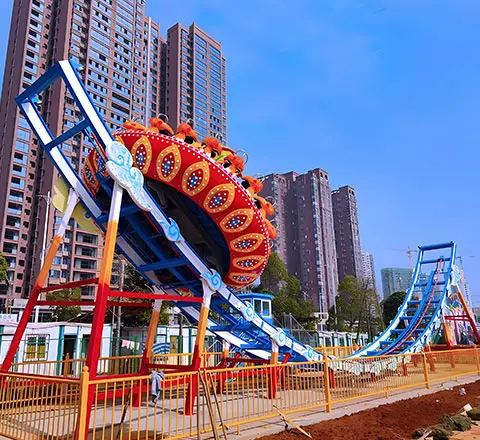


Drop tower rides are among the most iconic and thrilling attractions in modern amusement parks. While the experience for riders lasts only a few seconds, the engineering behind a drop tower ride involves multiple integrated systems working together to ensure safety, reliability, and long-term operation.
For investors, operators, and park planners, understanding the components of drop tower rides is essential—not only for safety evaluation, but also for drop tower ride maintenance planning, lifecycle cost control, and return on investment.
This guide explains the key components of a drop tower ride from a professional manufacturer’s perspective, focusing on structure, safety, and core technologies.

Main Structural Components of Drop Tower Rides
Tower Structure
The tower is the primary load-bearing structure of a crazy drop tower ride. It supports the vertical movement of the gondola and withstands both dynamic and environmental loads.
Key characteristics include:
- High-strength structural steel construction
- Precision-engineered vertical guide rails
- Wind load and fatigue resistance design
- Anchoring to a reinforced base foundation
A well-designed tower structure directly affects ride stability, operating smoothness, and long-term durability.
Gondola (Passenger Car)
The gondola is the passenger-carrying unit that ascends and descends along the tower. Its design balances capacity, comfort, and safety.
Typical features include:
- Ergonomically designed seats
- Integrated restraint mounting points
- Structural frames designed for repeated high-G-force operation
- Optional rotating or tilting configurations for enhanced thrill
From a manufacturing perspective, gondola strength and precision alignment are critical to safe vertical movement.
Lifting and Dropping System
Lifting Mechanism
The lifting system raises the gondola smoothly to the top of the tower before release. Depending on ride design, this system may include:
- Electric motor and gearbox
- Winch and steel wire rope system
- Chain lift system
- Guide rollers for vertical alignment
The lifting mechanism is engineered for controlled speed, redundancy, and consistent performance under frequent cycles.
Catch Car and Release Mechanism
Many amusement park drop tower rides use a catch car to lift the gondola. Once the ride reaches the designated height, a release mechanism disengages the gondola to initiate the drop.
Release systems are designed to be:
- Mechanically simple and reliable
- Electronically monitored
- Fail-safe by design
In professional free fall tower ride design, the release mechanism must default to a safe state even in the event of power loss.
Braking System: The Core Safety Component
Magnetic Braking System
Magnetic braking is the most widely used primary braking solution in modern drop tower rides.
How it works:
- Permanent magnets interact with conductive braking fins or plates
- Eddy currents are generated during descent
- Braking force increases automatically with speed
Key advantages:
- No physical contact or wear
- No external power required
- Consistent and predictable deceleration
This makes magnetic brakes inherently fail-safe and ideal for high-speed vertical rides.
(See more: How Do Drop Tower Rides Work? )
Emergency and Redundant Braking Systems
In addition to the main braking system, professional spinning drop tower rides incorporate secondary safety systems, such as:
- Hydraulic or pneumatic emergency brakes
- Progressive mechanical braking devices
- Energy-absorbing buffers
These systems ensure safe stopping even under abnormal operating conditions.
Passenger Safety Protection Systems
Restraint Systems
Passenger restraints are designed to securely hold riders during both free-fall and deceleration phases.
Common restraint configurations include:
- Over-the-shoulder restraints
- Lap bars combined with seat belts
- Dual-locking safety mechanisms
High-risk rides typically use redundant restraint systems, meaning two independent devices protect each passenger.
Sensors and Safety Interlocks
Drop tower amusement rides rely on multiple sensors to monitor real-time operating conditions, including:
- Position sensors
- Speed sensors
- Restraint status sensors
- Door and platform interlocks
If any parameter exceeds safe limits, the system prevents operation or initiates an emergency stop.
Electrical and Control System
PLC Control System
The PLC (Programmable Logic Controller) serves as the central control unit of the ride.
Its responsibilities include:
- Coordinating lift, release, and braking sequences
- Monitoring safety sensors and fault signals
- Managing ride timing and operation logic
Industrial-grade PLC systems are used to ensure reliability in demanding environments.
Control Cabinet and Operator Interface
The control system also includes:
- Electrical control cabinet with certified components
- Operator control panel with manual and automatic modes
- Emergency stop buttons and fault indicators
Clear human-machine interface design improves operational safety and efficiency.
Decorative and Theming Components
Exterior Theming and Visual Design
Beyond mechanical performance, visual impact plays a key role in a free fall drop tower’s appeal.
Optional theming elements include:
- Decorative tower cladding
- Custom color schemes
- LED lighting systems
- Night-time visual effects
These components enhance park branding and guest experience without affecting core safety systems.
Optional and Advanced Components
Sound, Lighting, and Ride Effects
Advanced tower drop rides may integrate:
- Synchronized sound systems
- Dynamic lighting during ascent or drop
- Interactive visual effects
These features increase ride attractiveness and repeat value.
Monitoring and Diagnostic Systems
Some modern designs include advanced monitoring functions, such as:
- Ride cycle data recording
- Fault diagnostics
- Maintenance reminders
These systems support efficient long-term operation and preventive maintenance.

Compliance, Standards, and Quality Control
International Safety Standards
High-quality drop tower rides are designed and manufactured in accordance with international standards, such as:
- CE (European conformity)
- EN and ASTM amusement ride standards
Compliance ensures the ride meets global safety expectations and local regulatory requirements.
Manufacturing Quality Control
From a manufacturer’s perspective, component quality is controlled through:
- Material inspection and traceability
- Precision machining and welding processes
- Assembly inspections
- Factory acceptance testing before delivery
Component reliability directly influences ride lifespan and operating cost.
How Component Quality Affects Performance and ROI
The quality of tower drop swing ride components impacts:
- Operational stability
- Maintenance frequency
- Downtime risk
- Passenger satisfaction
- Long-term return on investment
Choosing well-engineered components reduces total ownership cost over the life of the ride.

Choosing a Reliable Drop Tower Rides Manufacturer
When evaluating drop tower rides for sale, buyers should consider more than just the ride height or price.
Key factors include:
- Manufacturing experience
- In-house production capabilities
- Safety engineering approach
- After-sales support and spare parts availability
- Compliance with international standards
A manufacturer’s understanding of component integration is critical to delivering a safe and reliable ride.
Conclusion
Understanding the components of drop tower rides helps investors, operators, and engineers make informed decisions. From structural design and lifting systems to braking technology and safety protection, every component plays a role in delivering both excitement and safety.
A professionally engineeredtower drop amusement park ride is not defined by a single part, but by how all components work together as a complete system.


